The Driller's Offsider Pathway: The Hardest, Fastest Route to a Six-Figure FIFO Career
Looking for a fast track to a six-figure mining career with no prior experience? Discover how becoming a Driller's Offsider offers the ultimate entry point for resilient job seekers.
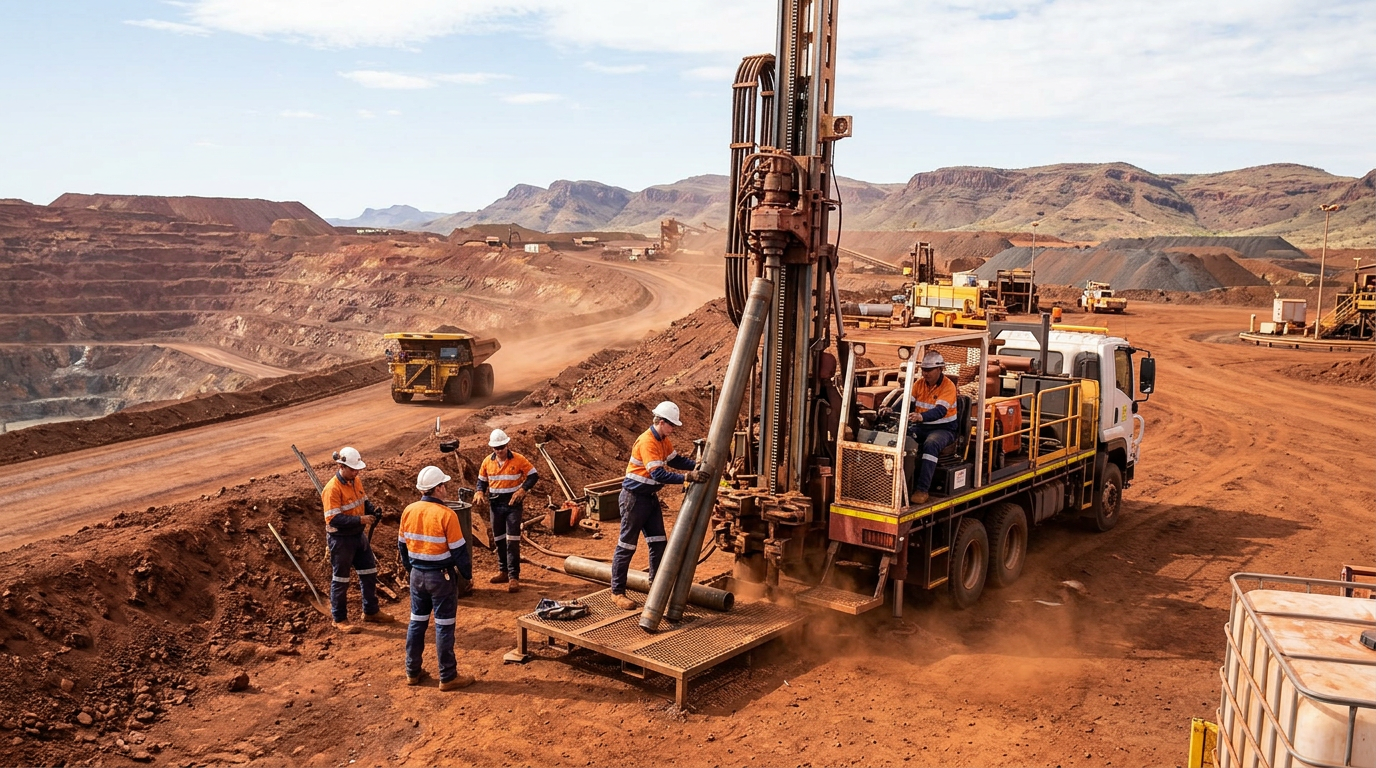
While thousands of aspiring mining greenhorns line up for highly competitive dump truck traineeships, there is another, much faster pathway onto Australian mine sites that is constantly starved for talent. That pathway is drilling offsiding. Often described as the most physically demanding job in the resource sector, becoming a Driller's Offsider is a trial by fire. However, for those with the grit to handle the workload, it represents the absolute fastest way to secure a six-figure fly-in, fly-out (FIFO) career without any formal qualifications.
Why Drilling Offsiding is the Ultimate Entry-Level Mining Job
While thousands of aspiring mining greenhorns line up for highly competitive dump truck traineeships, there is another, much faster pathway onto Australian mine sites that is constantly starved for talent. That pathway is drilling offsiding. Often described as the most physically demanding job in the resource sector, becoming a Driller's Offsider is a trial by fire. However, for those with the grit to handle the workload, it represents the absolute fastest way to secure a six-figure fly-in, fly-out (FIFO) career without any formal qualifications.
Drilling contractors are the unsung engines of the Australian resources sector. Whether a mining company is exploring for new gold deposits in the Tanami Desert, mapping out iron ore reserves in the Pilbara, or prepping a site for production blasting, they rely on specialized drill rigs. These rigs run around the clock, and they cannot operate without an offsider. Because of the intense physical demands and remote work environments, the turnover rate in this entry-level role is high. This constant churn is your ultimate opportunity: if you are physically fit, reliable, and ready to work, drilling companies are actively looking for you.
Choosing this route bypasses the long waiting lists and fierce competition associated with traditional mine-site traineeships. While major mining houses might receive ten thousand applications for a handful of clean-skin haul truck roles, drilling contractors are frequently recruiting year-round. If you can prove you have the mental toughness and physical capability to survive your first few swings, you will quickly find yourself with a highly secure, high-paying career that can set you up financially for life.
The Daily Reality: What Does an Offsider Actually Do?
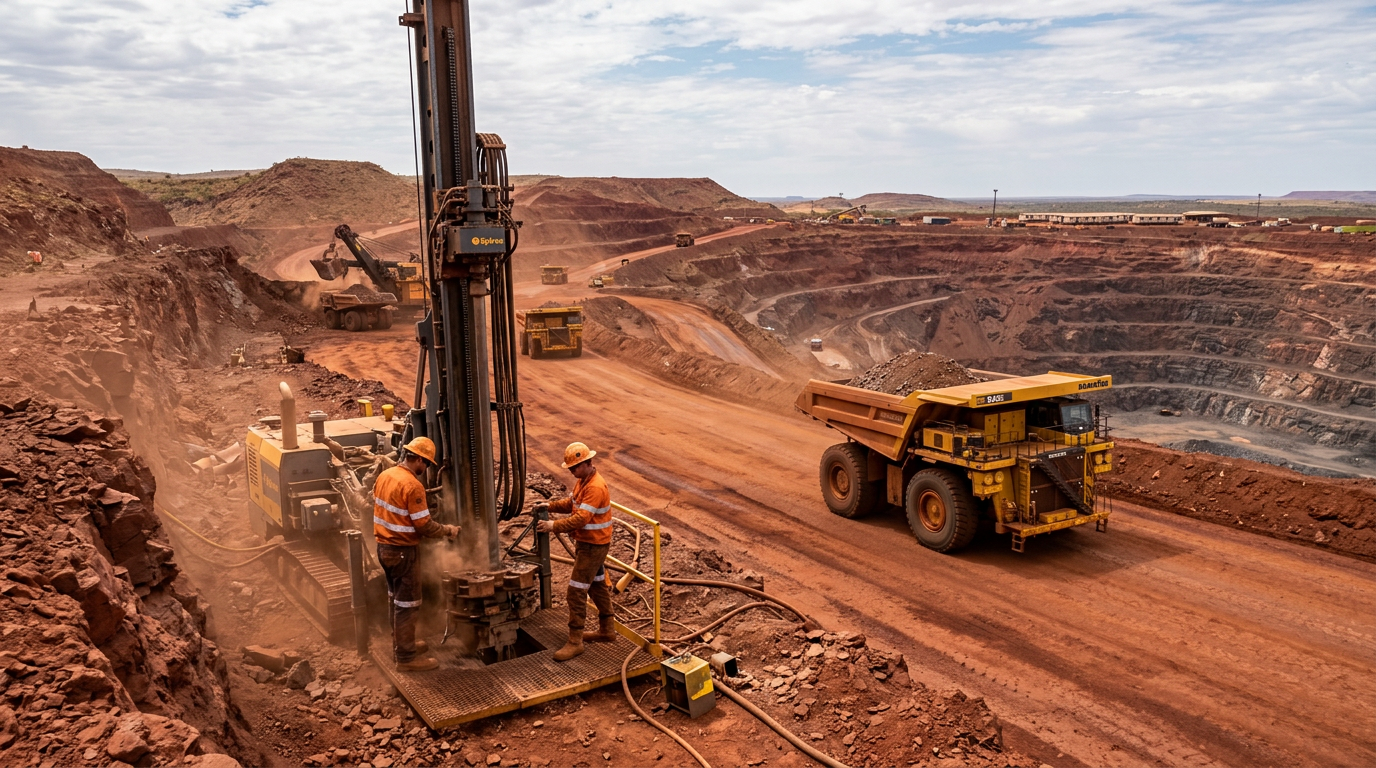
Before you apply, you must understand that this is not an office job, nor is it an air-conditioned cab. An offsider's primary role is to assist the Driller in operating the rig, which means constant, heavy manual labor for 12 hours a day. The specific duties depend on whether you are working in Diamond Drilling (exploration which extracts solid cylinders of rock) or Reverse Circulation (RC) drilling (which extracts pulverized rock and dust samples). Both methods are physically relentless, but they require slightly different tasks.
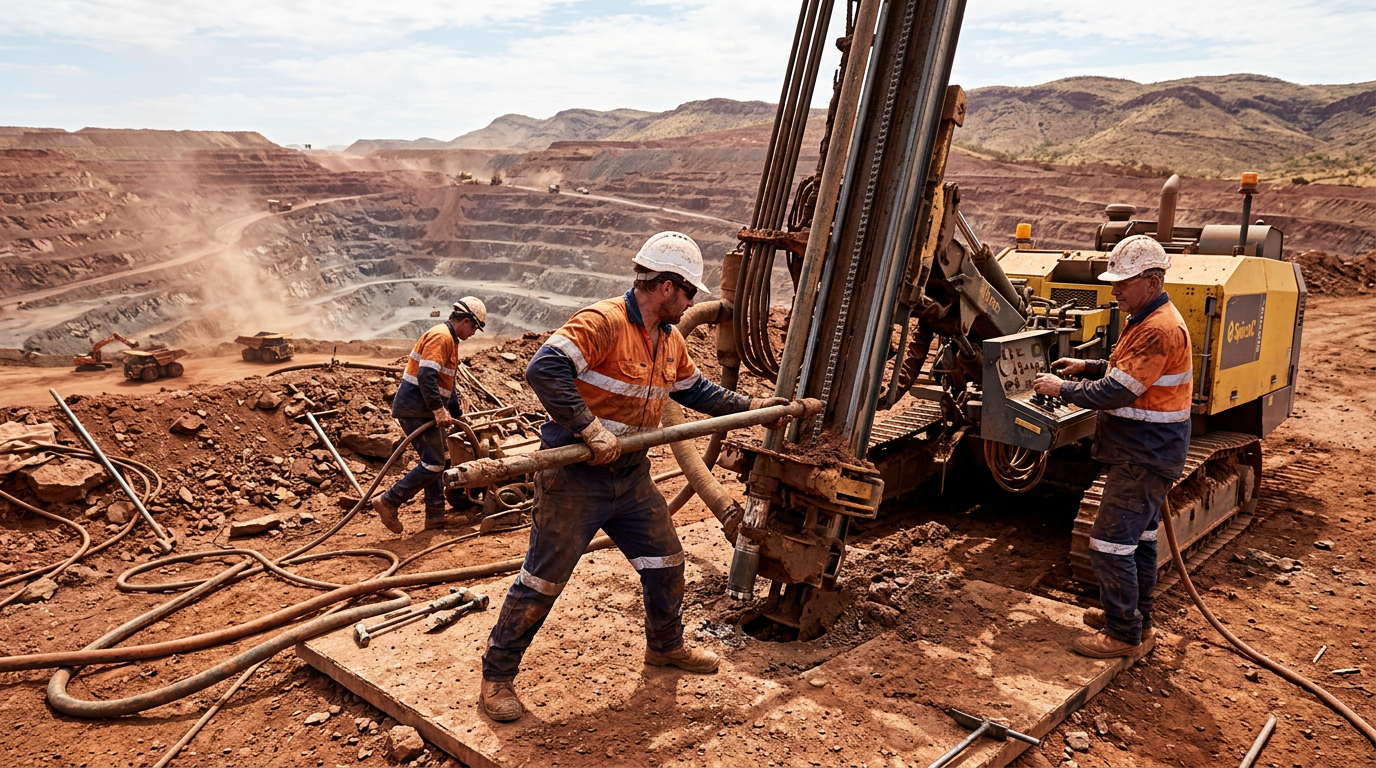
On an RC rig, your shift will be dominated by handling sample bags. You will be catching rock chips from the cyclone, split-sampling them, bagging them, and lining them up in order. These bags can weigh anywhere from 5 to 25 kilograms, and you will be handling hundreds of them a day in dusty, noisy environments. On a Diamond rig, the pace is slightly different but equally demanding. You will be handling heavy steel drill rods, pulling them from the ground, removing core samples from the inner tubes, washing the core, placing it into wooden core boxes, and keeping precise records. You will also be mixing heavy bags of drilling muds and additives to keep the drill hole stable.
Beyond the core sampling process, you are the rig's housekeeper. You will be responsible for washing down the rig, grease-gunning every moving part, changing heavy drill bits, and setting up and tearing down the entire drill site when it is time to move. It is dirty, oily, and muddy work. You will be working outdoors in the blistering summer heat of the Pilbara or the freezing winter desert nights, wearing full personal protective equipment (PPE) including heavy boots, safety glasses, gloves, and ear muffs.
The Pay and Rosters: Real Financial Rewards for Hard Yakka
The reason people subject themselves to this level of intense labor is simple: the money is exceptional, especially for someone with no prior mining experience. As a brand-new, clean-skin Driller's Offsider, you can expect to start on a day rate ranging between $350 and $450 AUD. When calculated across a standard FIFO roster, this translates to an entry-level annual income of approximately $100,000 to $120,000. Many contractors also offer productivity bonuses based on the number of meters drilled per shift, meaning your earning potential increases as you and your driller work more efficiently.
Rosters in the drilling sector are typically longer and more intensive than standard production mining rosters. While some mine-site roles offer even-time schedules like 2 weeks on, 2 weeks off (2:2), drilling exploration works on longer swings. The most common rosters for offsiders are 2:1 (two weeks on, one week off) or 3:1 (three weeks on, one week off). These longer swings mean you spend more time on site earning money and less time back home spending it, which is ideal for rapidly building a house deposit or clearing debt.
It is also important to note the difference between exploration drilling and production drilling. Exploration rigs often operate in highly remote, greenfield locations where you might be living in temporary exploration camps or caravans, eating meals cooked by a camp boss. Production or grade-control drilling occurs on established, active mine sites, meaning you will stay in fully serviced FIFO villages with modern gyms, wet messes, and high-quality dining halls. Your pay will be similar in both settings, but the lifestyle can vary significantly.
The Golden Tickets: What You Need to Get Hired
While drilling companies do not require you to have prior drilling experience, they do require a specific set of foundational credentials. If you show up with these tickets already on your resume, you instantly elevate yourself above ninety percent of other applicants. The absolute most important qualification you can obtain is a Heavy Rigid (HR) truck licence. Drill rigs and their supporting water and rod trucks are heavy vehicles; if you cannot drive them, you are far less valuable to a crew.
Ideally, you should aim for an HR Unrestricted (manual) licence, though an HR Synchromesh is often accepted by many larger contractors. Alongside your truck licence, you must hold a current, clean manual C-class driver's licence. Drilling crews often drive long distances between sites and towns, making a valid driver's licence non-negotiable. Additionally, you will need a National Police Clearance (usually less than six months old) and a current Senior First Aid certificate with CPR training.
For mine-site work, you will also need a Construction White Card (General Induction). Some drilling companies will also look highly upon a High Risk Work Licence for Dogging or Forklift operation. If you invest the money to secure your HR licence and First Aid certificate before you apply, you are sending a clear signal to recruiters that you are serious about the industry and ready to hit the ground running.
Survival Guide: How to Get Through Your First Swing
The first swing (roster block) is where most people quit. The sudden transition to 12-hour shifts of intense physical labor, combined with the dry heat or freezing cold of the Australian outback, shocks the system. To survive, you must prepare your body and mind. Hydration is your primary defense. You cannot simply drink water when you are thirsty on a drill rig; you must constantly consume electrolytes and water throughout your shift, often drinking up to eight liters a day in the summer.
Your skin will also take a beating. You will be covered in grease, diesel, mud, and saline water. Investing in high-quality, comfortable steel-cap work boots and breaking them in before you arrive on site is absolutely critical; blisters can end your swing before it starts. Pack plenty of heavy-duty work socks, a good quality chafing cream, and moisturizing lotion to protect your hands from drying out and cracking under the constant friction of gloves and drill steel.
Finally, manage your attitude. A drill rig is a high-pressure, dangerous environment, and drillers are notoriously direct communicators. If you get yelled at, do not take it personally; focus on why you were corrected and correct the behavior immediately. Drillers do not expect you to know everything, but they do expect you to listen, work safely, and never stand around with your hands in your pockets. If you show up with a positive attitude, a willingness to learn, and a high work ethic, you will earn the respect of your crew.
The Long Game: Career Progression and Beyond
Offsiding is not a job you want to do forever, and the industry does not expect you to. It is a stepping stone. For those who survive the first year, the career progression is incredibly rapid. As you master the mechanics of the rig and safety protocols, you can progress to a Relief Driller or Driller's Assistant, which comes with a significant pay bump. Within two to three years of hard work, you can qualify as a Driller, running your own rig and earning upwards of $150,000 to $180,000 per year.
From there, the pathways open up even further. Experienced drillers can transition into Drilling Supervisors, Operations Managers, or Drilling Coordinators working directly for major resource companies. Alternatively, the grit and reputation you build as a successful offsider carry immense weight across the entire mining industry. If you want to transition into other departments later—such as blast crew, heavy equipment operation, or safety—having a drilling background on your resume proves to any mine manager that you have the work ethic and resilience to handle any job on site.
To get started, skip the major mining houses and apply directly to the Tier 1 and Tier 2 drilling contractors who actively manage these operations. Look for companies like DDH1 Drilling, Swick Mining Services, Mitchell Services, Ausdrill, and Major Drilling. Monitor their careers pages, tailor your resume to highlight your physical fitness, mechanical aptitude, and commitment to safety, and be ready to answer the call when they offer you the toughest, fastest ticket to a six-figure FIFO life.