USA Mining Jobs Guide — Working in Australia
For American Mine Workers Looking at Australia — How US Experience, Tickets and Visas Translate to Australian Mine Sites.
Overview
This USA region page is written for American mine workers, operators, tradespeople and engineers considering a move to Australian operations. US experience travels well — Australian sites run the same Caterpillar, Komatsu and Liebherr fleets, and the underground and open pit disciplines are broadly comparable — but the compliance paperwork is different and needs to be sorted before you can start.
Visas for US Applicants
American applicants generally need an employer-sponsored skilled visa, a skilled independent visa or a working holiday visa depending on age and occupation. Mining houses and large contractors sponsor for genuine skill shortages, particularly in trades, HV electrical, engineering and technical geology roles. Always confirm current requirements with the Australian Department of Home Affairs before committing to any move.
MSHA Experience vs Australian Tickets
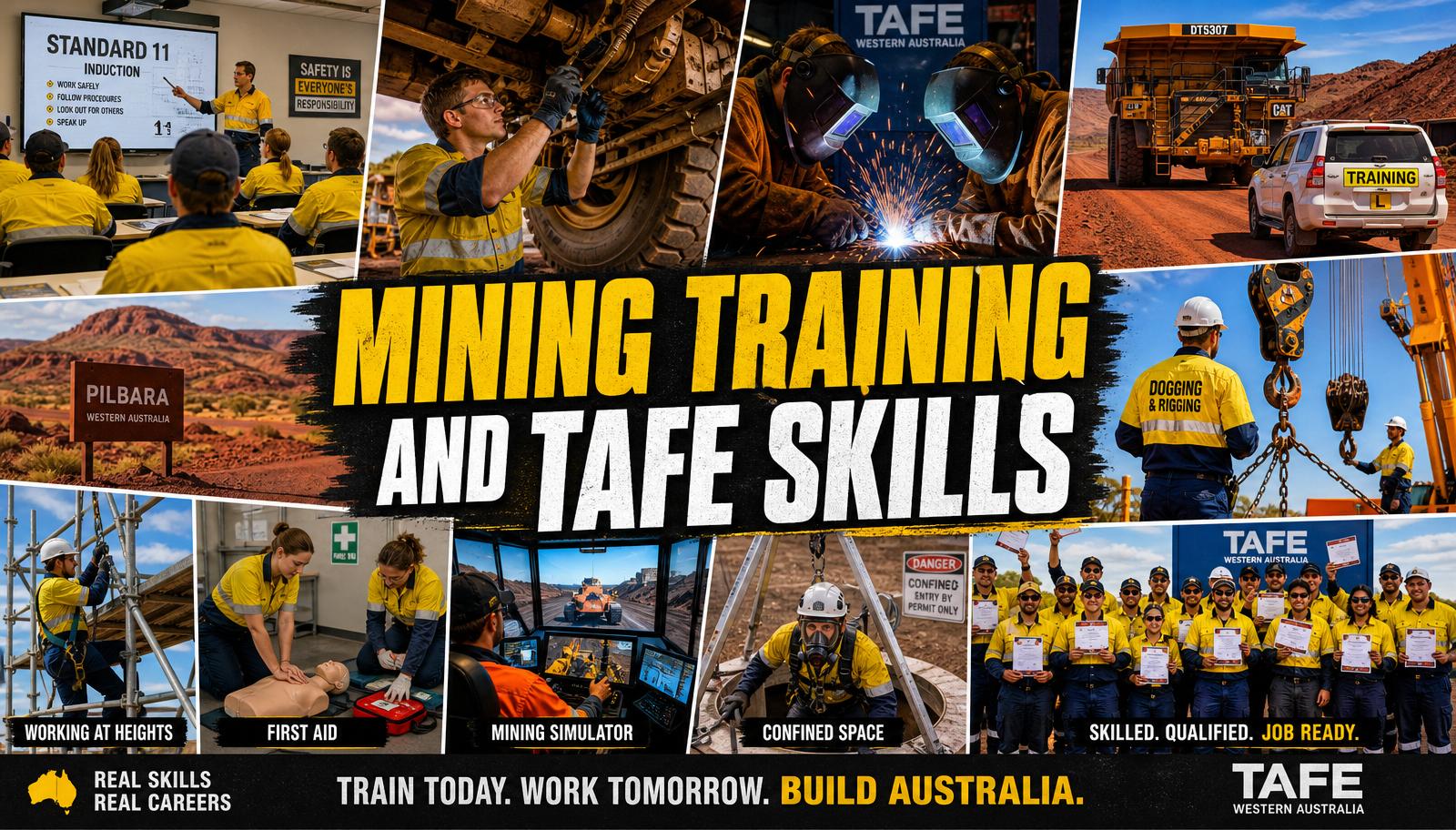
Your MSHA Part 46 or Part 48 training does not transfer directly. Australian sites require a White Card and a Standard 11 Surface or Underground induction, plus role-specific tickets such as Working at Heights, Confined Space, Dogging or Rigging. The good news is these are short courses — most are completed in days, not months — and your existing operating hours are still what employers care about.
Where the Jobs Are
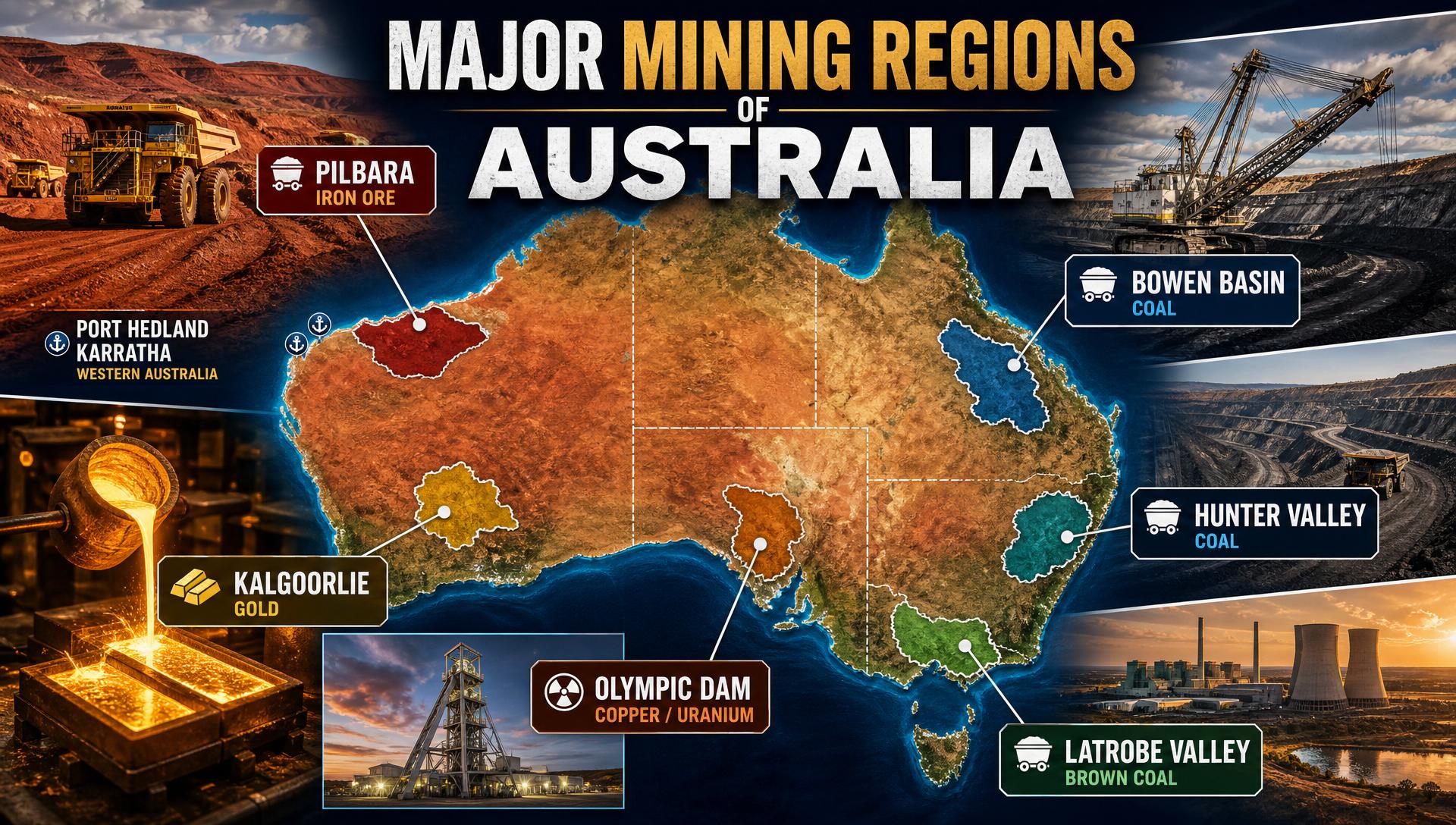
The Pilbara Iron Ore Belt, the Kalgoorlie Goldfields, the Queensland Bowen Basin, the NSW Hunter Valley, the Latrobe Valley and Olympic Dam in South Australia carry the bulk of Australian mine site hiring. Each region has its own commodity mix, roster culture and dominant employers, and our Region Guides map every one of them with towns, employers and a full deep-dive on getting hired locally.
The Tickets You Actually Need
Almost every Australian mine site entry role comes down to a short list of tickets: White Card, Standard 11 Surface or Underground Induction, a HR or HC Truck Licence, Working at Heights, Confined Space, Dogging or Rigging and a current First Aid certificate. Our Certification Guides explain what each one costs, how long it takes, who issues it and how employers weigh it.
FIFO Life, Rosters and Camp Reality
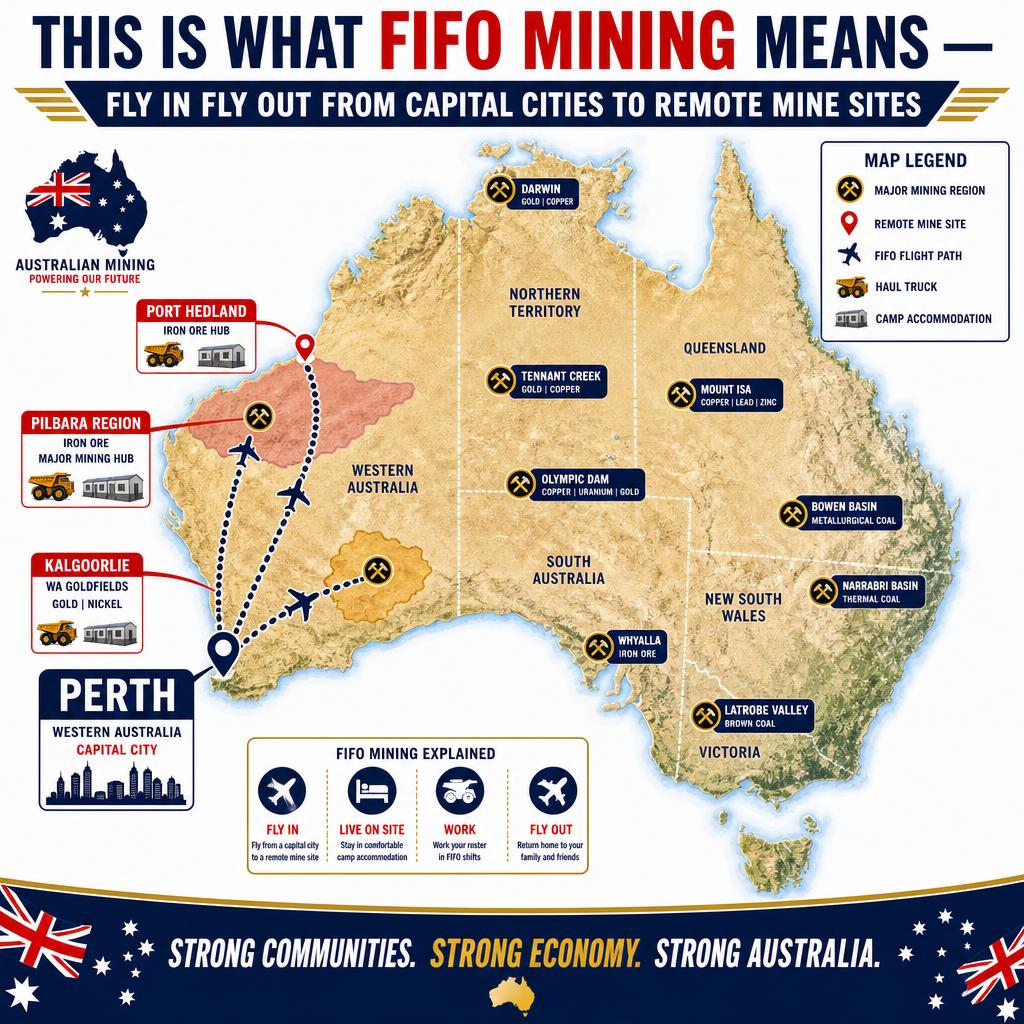
Most Australian mine site work is Fly-In Fly-Out from Perth, Brisbane, Adelaide or a regional hub, on rosters like 8/6, 2/1, 14/7 or even/time. The FIFO Guide covers flight paths, camp accommodation, food, gym and wet mess culture, packing lists, family separation and the mental health side of swing work.
Pay Ranges Without the Hype
Entry-level Haul Truck Operators, Trade-qualified Diesel Fitters, HV Electricians, Shot Firers, Supervisors, Mining Engineers and even Camp Chefs all sit on published, realistic pay bands. Our High Paying Mining Jobs section lists what each role genuinely earns per year and exactly what it takes to land one.

Start Here — The Best Guides on This Site
Frequently Asked Questions
Will my US trade qualification be recognised?
Trade qualifications usually require a skills assessment through the relevant Australian assessing authority. Diesel fitters, boilermakers and electricians are commonly assessed and are in strong demand.
Is the pay better in Australia?
Australian mine site pay is high by global standards — trade-qualified roles routinely exceed AUD $160,000 — but compare against Australian cost of living and tax rates before deciding.
Can I apply from the United States?
Yes. Many applicants apply from overseas, but sponsorship-ready roles are far easier to secure if you hold assessed qualifications and substantial documented experience.