How to Land an Entry-Level FIFO Dump Truck Traineeship: The Clean-Skin Guide
Breaking into FIFO with zero experience? Learn how to land a paid haul truck traineeship, structure your clean-skin resume, and ace the recruitment process.
In the Australian mining industry, a 'clean-skin' is someone who has never set foot on a mine site. For decades, breaking into the lucrative Fly-In Fly-Out (FIFO) lifestyle was notoriously difficult, with almost every job advertisement demanding 'at least two years of prior site experience.' Today, structural labor shortages across Western Australia's Pilbara region and Queensland's Bowen Basin have forced major mining companies to completely rethink their recruitment strategies.
Demystifying the Clean-Skin: Why Mines Hire Novices
In the Australian mining industry, a 'clean-skin' is someone who has never set foot on a mine site. For decades, breaking into the lucrative Fly-In Fly-Out (FIFO) lifestyle was notoriously difficult, with almost every job advertisement demanding 'at least two years of prior site experience.' Today, structural labor shortages across Western Australia's Pilbara region and Queensland's Bowen Basin have forced major mining companies to completely rethink their recruitment strategies.
Rather than competing for a limited pool of experienced operators, top-tier mining companies now run structured intake programs specifically designed for clean-skins. Training a novice from scratch allows employers to instill an exemplary safety culture without having to break bad habits learned on other sites. If you have the right attitude, solid communication skills, and a strong work ethic, you are highly trainable—and highly valuable to modern mining operations.
Operating a multi-million-dollar haul truck, such as a Caterpillar 793 or a Komatsu 930E, is not about high-speed driving. It is a highly disciplined, safety-critical role that requires absolute adherence to procedures, radio protocols, and speed limits. Because the job relies heavily on processes rather than high-performance driving skills, miners actively target candidates from diverse backgrounds, including retail, hospitality, agriculture, and the military.
The Traineeship Route vs. Self-Funded Licensing
A common mistake made by entry-level job seekers is spending thousands of dollars on private training courses before applying. You will see plenty of private training organizations offering three-day 'dump truck tickets' (such as the RIIMPO338E ticket) with promises of high-paying jobs. In reality, major Tier 1 miners rarely recognize these short courses as a substitute for real-world experience, and holding one of these tickets is rarely enough to secure a job on its own.
The most secure, practical, and financially viable pathway into the industry is a formal, paid Traineeship in Surface Extraction Operations (typically a Certificate II or III qualification). Under a traineeship structure, you are hired as a full-time employee from day one. Your employer covers the cost of all training, flights, high-quality camp accommodation, meals, and PPE, while paying you a full wage while you learn.
If you want to spend your own money to improve your employment prospects, invest it in securing a Heavy Rigid (HR) or Heavy Combination (HC) driver's licence. Most major mining companies require an HR licence as a mandatory prerequisite for their traineeships because it proves you can handle large, heavy vehicles. Securing your HR licence independently demonstrates initiative and makes your application instantly stand out in a crowded field.
Structuring a Winning Clean-Skin Resume
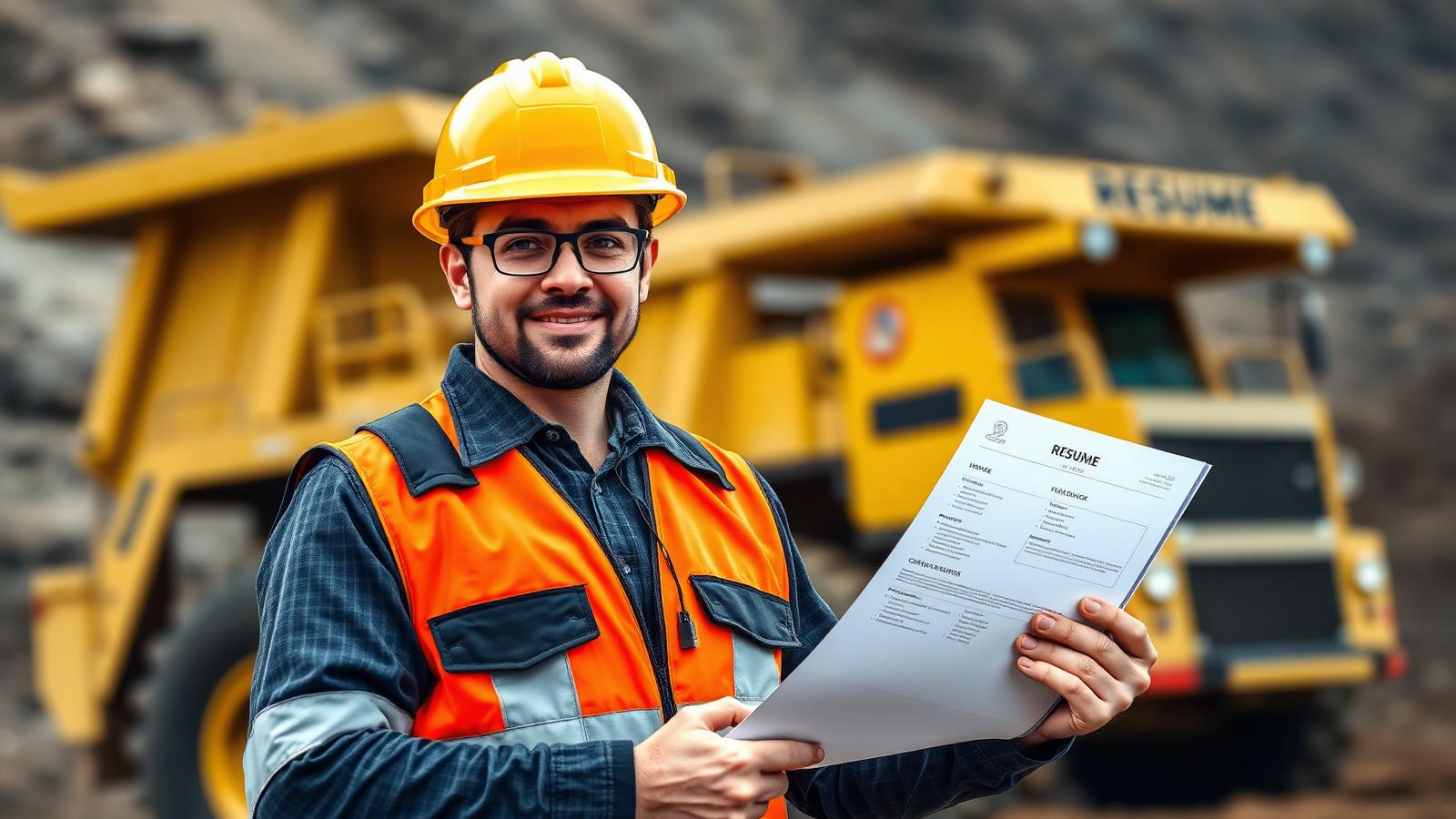
To get past the initial automated screening software (Applicant Tracking Systems, or ATS) used by major mining employers, your resume must be tailored specifically to the mining environment. Recruiters reading your resume do not care if you can drive fast; they care if you can work safely under pressure, follow strict operating procedures, and cope with the physical demands of long-term shift work.
When drafting your resume, dedicate a prominent section to safety compliance. Detail your experience with Job Safety Analyses (JSAs), hazard identification, toolbox talks, standard operating procedures (SOPs), and the correct use of personal protective equipment (PPE). If you have worked in warehousing, logistics, manufacturing, civil construction, or agriculture, you already have valuable transferable safety skills that need to be highlighted.
Do not underestimate the importance of demonstrating your capacity for hard physical work and long hours. If you have experience working 12-hour shifts, night shifts, outdoors in extreme heat, or away from home for extended periods, make sure this is clearly stated. This reassures recruiters that you understand the physical realities of a FIFO lifestyle and are highly unlikely to quit after your first challenging swing.
Cracking the Multi-Stage Assessment Process
Securing a traineeship is a highly competitive process, often attracting thousands of applicants for a single intake. Once your resume is approved, you will enter a rigorous, multi-stage assessment pipeline. The first step is almost always an online cognitive, psychometric, and mechanical reasoning test. These assessments evaluate your spatial awareness, problem-solving abilities, and behavioral alignment with safety regulations.
If you pass the online testing, you will be invited to complete a one-way video interview. You will be asked to record answers to pre-set questions using a webcam or phone. To ace this stage, structure your answers using the STAR method (Situation, Task, Action, Result). Focus your examples on times you successfully resolved a safety concern, handled a difficult teammate, or adapted to a major change in your working environment.
The final hurdle is often an in-person or virtual group assessment day. Recruiters use these sessions to observe your interpersonal skills and teamwork under pressure. The biggest mistake you can make here is trying to dominate the group or show off. Mining companies do not want cowboys; they want team players who listen, communicate respectfully, follow instructions, and prioritize the collective success and safety of the team.
What Your First Six Months on Site Actually Looks Like
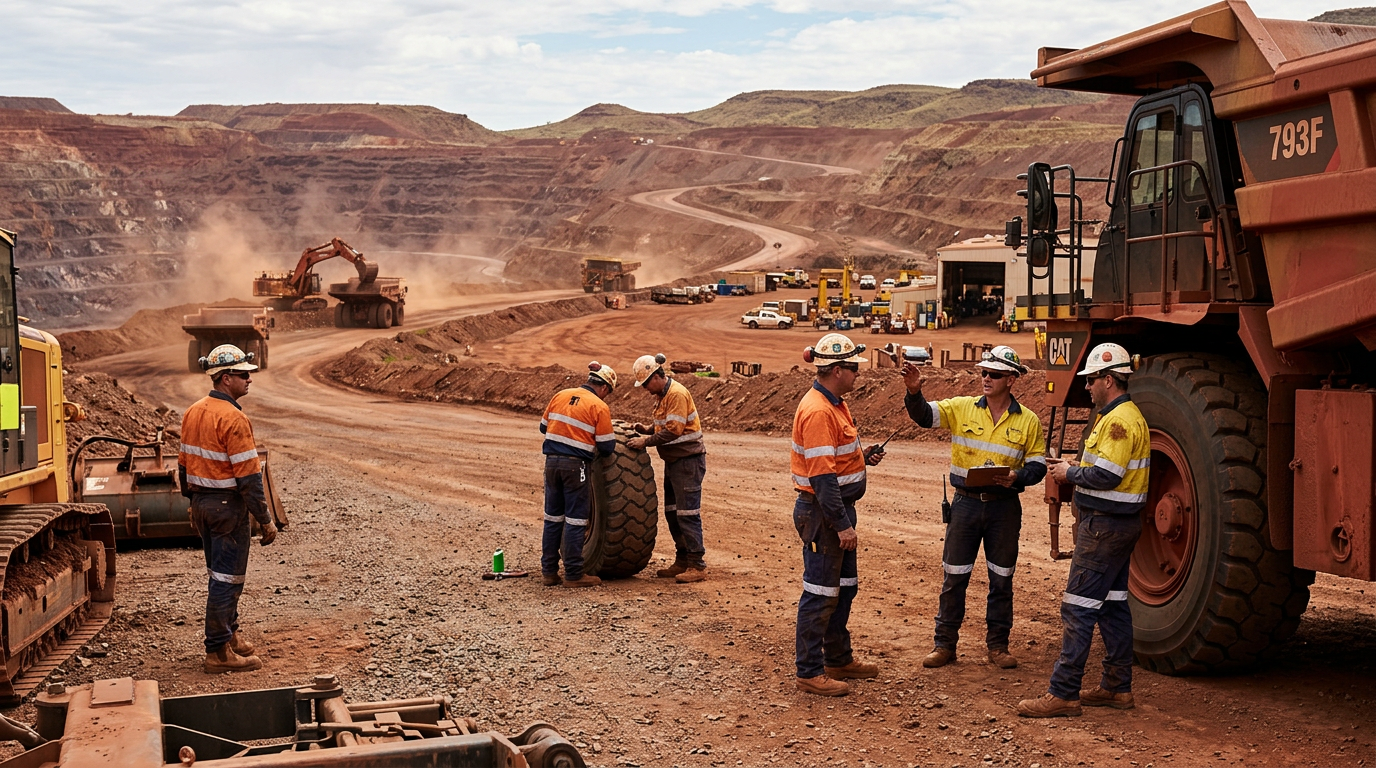
Your first swing on a mine site will not involve driving a massive haul truck straight into the pit. The first week is dedicated to intensive site-specific inductions, medical reviews, drug and alcohol screening, and simulator training. You will spend hours learning the specific geography of the lease, emergency evacuation procedures, and the complex rules of the haul roads.
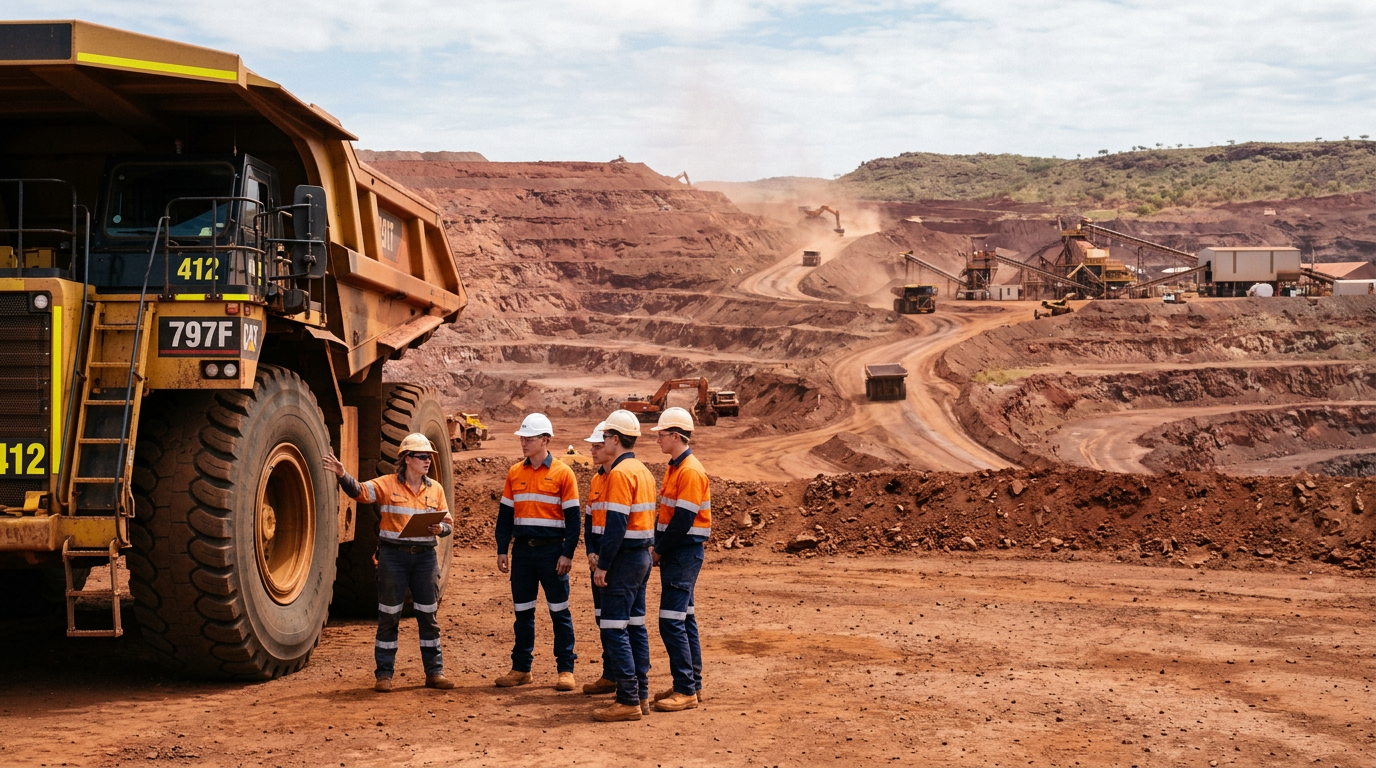
Once you transition to the actual pit, you will begin 'double-banking.' This involves sitting in the buddy seat of a haul truck cabin for several shifts, observing an experienced trainer or mentor. You will watch how they position the truck under massive excavators, negotiate steep ramps, interact with dozers at the waste dump, and communicate over the two-way radio system. Radio communication is a critical skill; you must learn to call out your position clearly and use correct site-specific terminology.
When you finally take the controls, the work becomes a mental test of endurance. Operating a haul truck is highly repetitive. You will spend 12 hours driving back and forth along the same dirt tracks, hauling ore from the pit to the crusher or waste dumps. Managing fatigue, keeping yourself focused during the early hours of a night shift, and maintaining high safety standards despite the monotony are the biggest challenges you will face.
Where to Find and Apply for Traineeships
To maximize your chances of success, you should target two distinct types of employers: owner-operators and mining contractors. Owner-operators are the major mining houses like BHP, Rio Tinto, Fortescue (FMG), and Mineral Resources. They run large, highly structured traineeship intakes once or twice a year, which are advertised heavily on their corporate careers pages and major job boards.
Mining contractors, such as Thiess, MACA, Byrnecut, and BGC Contracting, manage operations on behalf of resource companies. These businesses recruit on a project-by-project basis, meaning they run smaller, more frequent traineeship intakes throughout the year. Keep a close eye on their websites and set up automated job alerts on Seek using targeted search terms like 'clean-skin haul truck,' 'entry level operator traineeship,' and 'surface extraction trainee.'
Finally, persistence is the defining factor for successful clean-skins. It is not uncommon for FIFO workers to apply for dozens of traineeships over six to twelve months before securing an interview. Use this time to build your resume, complete your HR driver's licence, and network with industry professionals. Once you break through and complete your traineeship, you will have a nationally recognized qualification and a highly lucrative career path open to you.