The Entry-Level FIFO Ticket Guide: What You Actually Need to Get Hired on Australian Mine Sites
Demystifying the qualifications you actually need to land your first FIFO job in WA or Queensland, without wasting thousands on useless ticket mills.
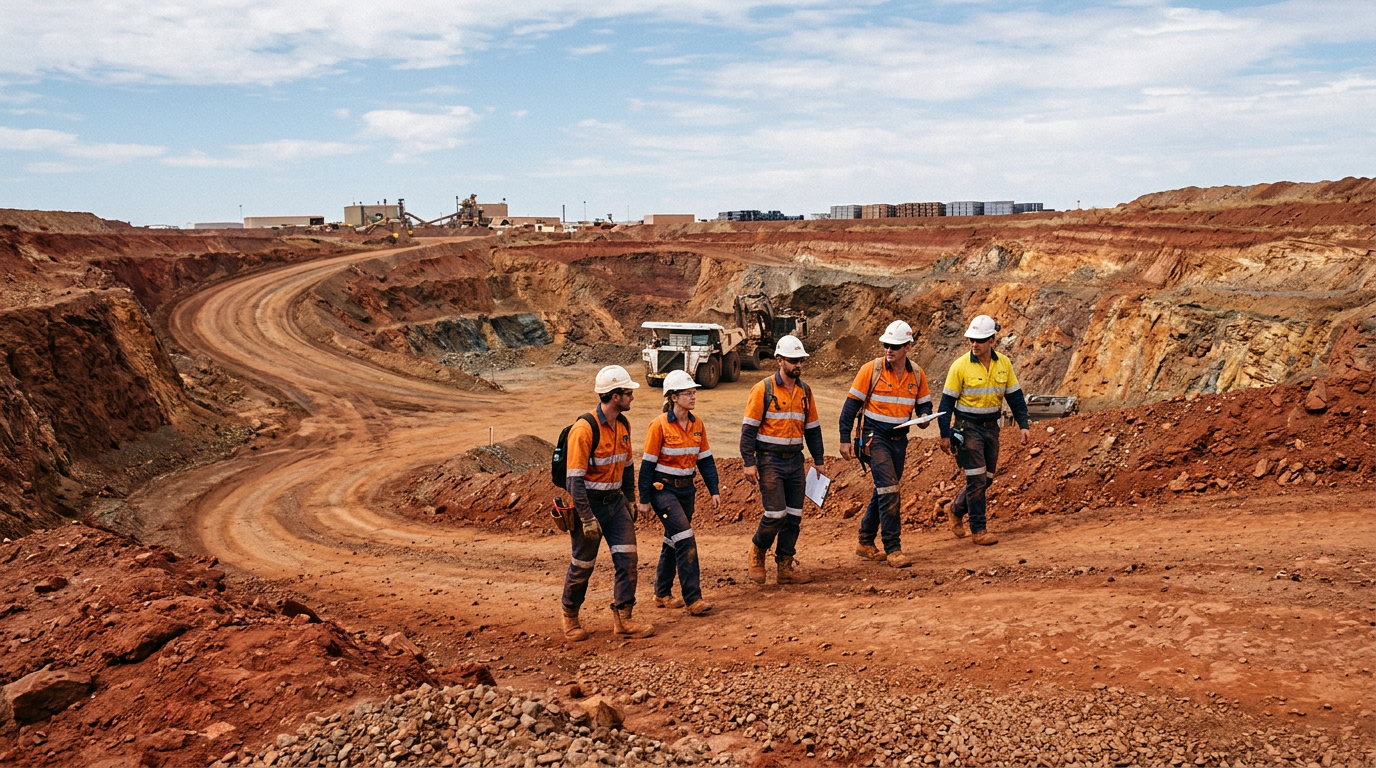
The dream of securing a high-paying FIFO job in Western Australia or Queensland is highly attractive, but greenhorn candidates often hit a wall before they even submit an application. The most common pitfall is the belief that collecting a dozen random tickets will magically open doors. The reality of the modern Australian mining sector is that recruitment officers are looking for a very specific blend of attitude, physical capability, and high-impact, site-ready certifications.
The Truth About Entry-Level FIFO: Skills vs. Tickets
The dream of securing a high-paying FIFO job in Western Australia or Queensland is highly attractive, but greenhorn candidates often hit a wall before they even submit an application. The most common pitfall is the belief that collecting a dozen random tickets will magically open doors. The reality of the modern Australian mining sector is that recruitment officers are looking for a very specific blend of attitude, physical capability, and high-impact, site-ready certifications.
While the resources sector continues to demand utility workers, drillers' offsiders, trade assistants, and dump truck operators, employers are inundated with resumes. The first line of defence against this deluge is the automated Applicant Tracking System (ATS), followed by HR personnel who scan CVs in seconds. Having the exact, non-negotiable tickets listed clearly at the top of your resume is often the only difference between the 'delete' folder and a phone interview.
To break into the industry without spending thousands of dollars on useless courses, you must understand the distinction between mandatory site-entry requirements and operational tickets. This guide breaks down the essential certifications required for WA and QLD mine sites, detailing what they cost, how long they take, and which ones will actually get you on a plane to the Pilbara or the Bowen Basin.
The Mandatory Base: Site Entry and Safety Essentials
Before you can set foot on an active mine site, you must pass baseline safety and legal clearances. The foundation is the General Construction Induction Card, universally known as the White Card (CPCWHS1001). While originally designed for construction, it is a mandatory prerequisite for almost every mine site in Australia. Obtaining this card is inexpensive—usually costing between $50 and $120—and is best completed via a face-to-face course to ensure broad corporate acceptance across all states.
The second baseline requirement is a clean National Police Clearance, which must be less than three to six months old depending on the employer. Many mining companies, particularly those operating in gold, uranium, or high-security mineral processing, will instantly filter out applicants with recent or severe criminal records. This check costs around $50 to $70 and should be renewed regularly while you are actively job hunting.
Finally, you cannot escape the medical. A standard mine-site pre-employment medical is rigorous, incorporating a physical assessment, spirometry (lung function), audiometry (hearing), and a drug and alcohol screen (urinalysis). While the employer usually pays for the medical once you have a conditional offer, you must be prepared to pass. If you cannot pass an instant urine screen for illicit substances or alcohol on day one, you risk being blacklisted by that recruiter, often permanently.
Driving the Big Rigs: Heavy Vehicle Licensing
If your goal is to drive a haul truck, water cart, or service vehicle, your standard class C car driver's licence will not cut it. The single most valuable asset an entry-level candidate can possess is a Heavy Rigid (HR) driver's licence. Specifically, an HR licence with an 'Unrestricted' or 'B-class' (synchromesh) endorsement is highly prized. While some operations accept an automatic HR licence, having the manual gearbox capability makes you infinitely more versatile as a utility player or trade assistant.
Obtaining your HR licence is a significant financial investment, usually costing between $1,200 and $2,500 depending on the training hours you need. However, this is the one ticket that pays for itself almost instantly. When a mining company looks for green dump truck operators, they target candidates who already have an HR licence because it proves you have the spatial awareness and confidence to handle heavy vehicles on active, unsealed haul roads.
It is also worth noting that driving history matters. If your record is littered with speeding fines, reckless driving charges, or recent suspensions, insurers for major mining houses like BHP, Rio Tinto, or Hancock Prospecting may refuse to cover you. Clean up your driving habits long before you apply, and be prepared to present a clean five-year driving history printout from your state's transport authority.
The Golden Tickets: High-Risk Work and Specialized Safety
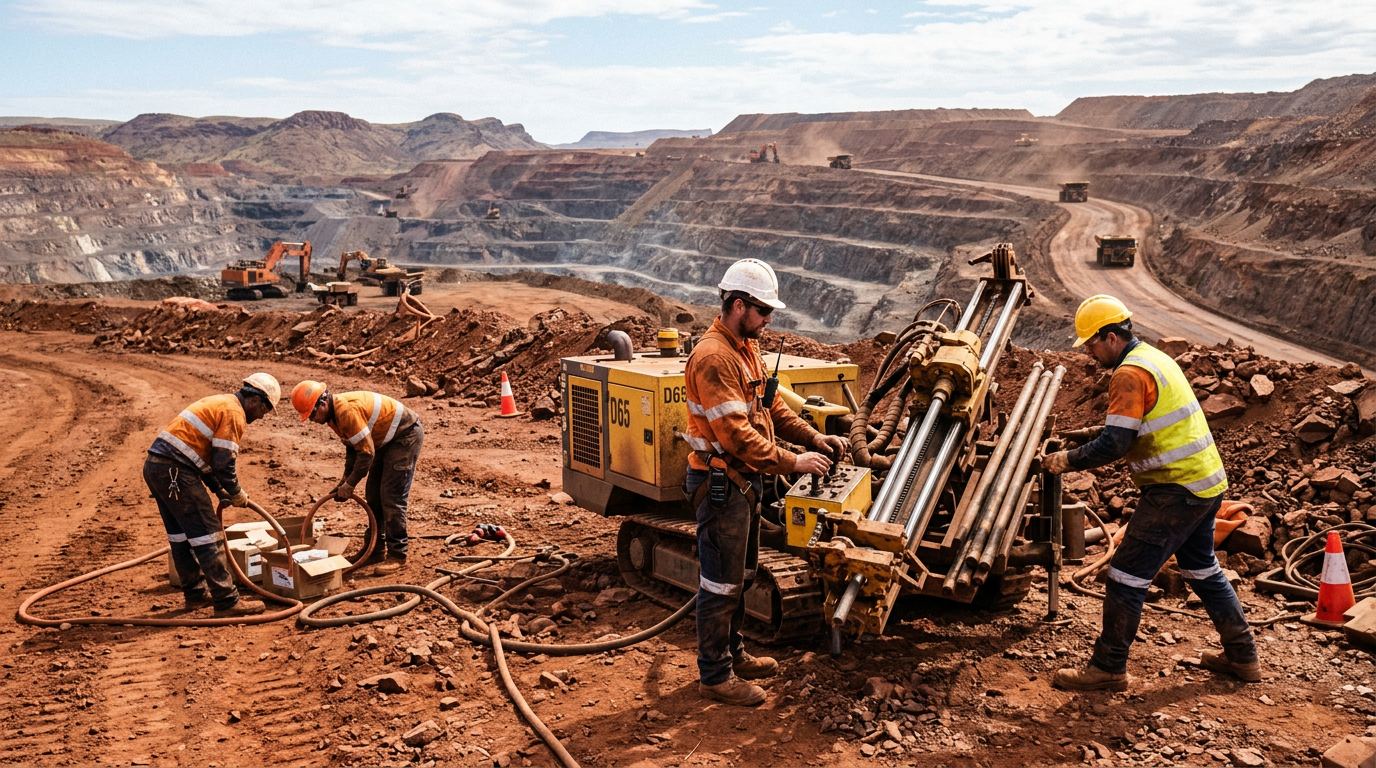
If you want to work as a Trade Assistant (TA), driller's offsider, or processing plant operator, you need to add high-risk and specialized safety tickets to your arsenal. The 'Golden Trio' of mining tickets consists of Working at Heights (RIIWHS204E), Enter and Work in Confined Spaces (RIIWHS202E), and Gas Test Atmospheres (MSMPER205). These three courses are often run as a combined two-day package by registered training organisations (RTOs) for around $500 to $800.
Working at Heights is essential for any role involving maintenance, scaffolding, or plant operations, as safety standards are uncompromising when it comes to fall prevention. Confined Spaces training is equally critical; processing vessels, tanks, chutes, and conveyor systems require strict permits to enter, and having this ticket shows employers you understand atmospheric hazards and rescue protocols. Gas testing is the logical companion, allowing you to operate detection equipment to ensure an area is safe.
For those leaning towards logistics, warehousing, or maintenance support, a High-Risk Work (HRW) Licence with a Forklift (LF) or Dogging (DG) rating is incredibly powerful. A dogger is responsible for slinging loads and directing crane operators, which is a highly valued skill on busy shutdown sites. These HRW licences are nationally recognized, highly regulated, and demonstrate to a supervisor that you can work safely under high-pressure conditions.
State-Specific Requirements: WA vs. Queensland
While many tickets are nationally recognized under the Resources and Infrastructure Industry (RII) training package, there are critical regional differences you must navigate. If you are targeting Queensland’s coal-rich Bowen Basin, you must obtain the Standard 11 Mine Safety Induction (Coal). This is a mandatory, multi-day course covering risk management, fire safety, and hazard identification. Without a Standard 11 statement of attainment, Queensland coal operators will not review your application.
In Western Australia, the regulatory landscape is governed by the Work Health and Safety (Mines) Regulations. While WA does not have a single direct equivalent to the Standard 11, most tier-one operators require their own site-specific inductions. However, having a WA Section 44 transition card (or equivalent WHS supervisor training) is highly beneficial. For iron ore and lithium operations in the Pilbara, having a valid MSIC (Maritime Security Identification Card) can also be a massive advantage if you are working near port facilities.
Understanding these geographic nuances saves you from spending money on irrelevant qualifications. For instance, getting a QLD Standard 11 is of minimal use if you intend to fly out of Perth to a gold mine in Kalgoorlie. Focus your financial resources on the region you are physically willing and able to fly out of, matching your training portfolio to the dominant commodities of that state.
Packaging Your Profile: How to Pitch Your Tickets
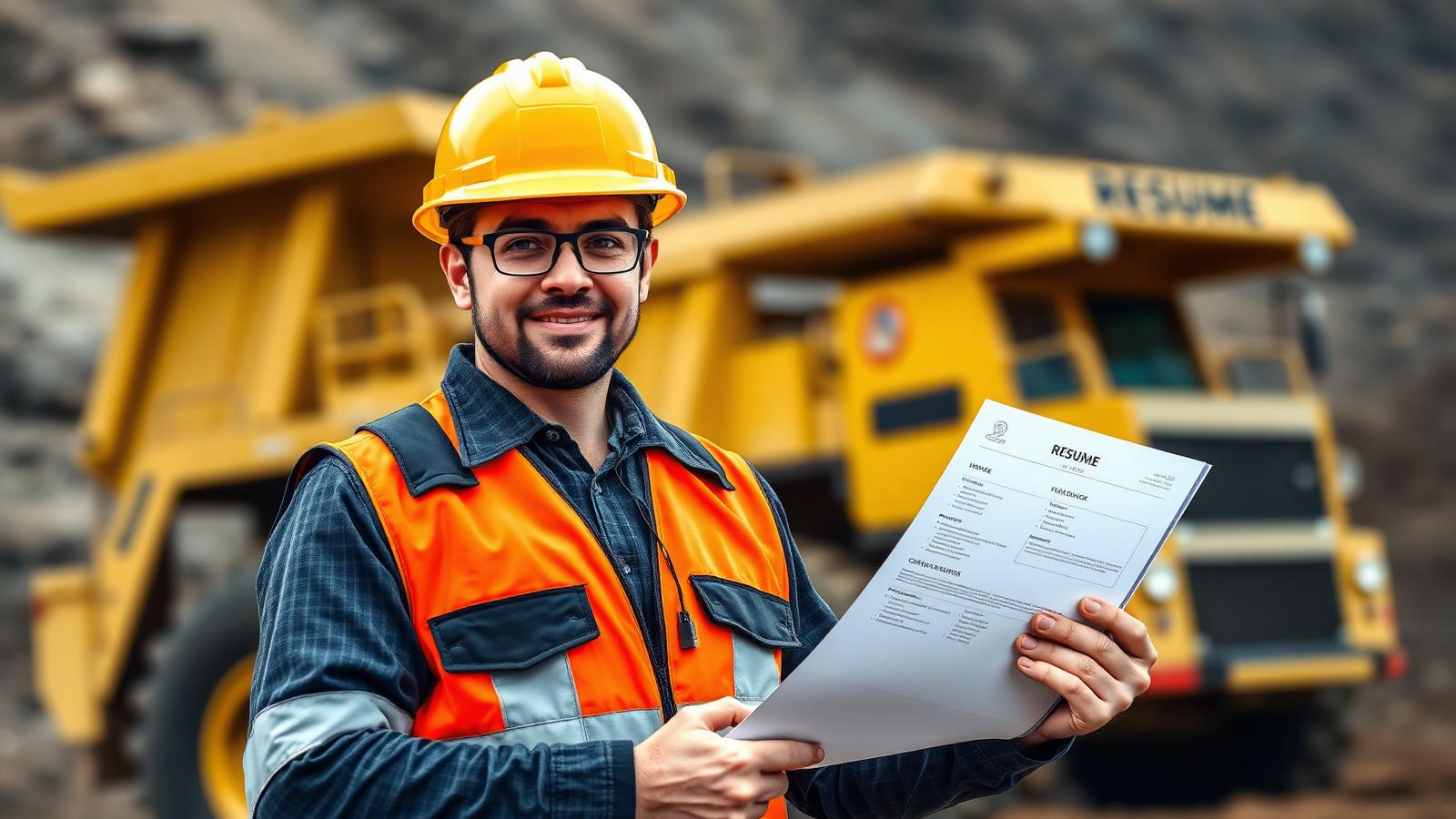
Once you have invested your hard-earned cash in the right tickets, the final step is presenting them effectively to mining recruiters. Do not bury your qualifications on the third page of your resume. Your tickets, licences, and safety certifications should be positioned prominently on the first page, right below your personal details and professional summary. Use the exact national codes (e.g., 'RIIWHS204E - Work at Heights') so that automated ATS systems can easily crawl and flag your resume as a match.
Be wary of the 'ticket mill' trap. Some training providers will try to sell you expensive 'all-inclusive' mining packages costing up to $5,000, promising guaranteed jobs. In reality, no RTO can guarantee a job, and many of these packages contain generic tickets that are useless on an actual mine site. Stick to the core credentials outlined in this guide, gain some heavy industry experience locally if you can, and present yourself as a safe, reliable, and drug-free candidate who is ready to work.
The FIFO lifestyle is demanding, but the financial and career rewards are unmatched for those who can get their foot in the door. By strategically acquiring the correct entry-level tickets, keeping your driving record clean, and preparing your physical fitness, you transform your resume from a hopeful gamble into a highly competitive, site-ready asset that recruiters cannot afford to ignore.