FIFO Rosters Explained: How to Choose the Right Swing for Your Pay and Lifestyle
Understand how different FIFO rosters impact your take-home pay, travel time, and family life. Learn how to choose the right swing for your personal goals.
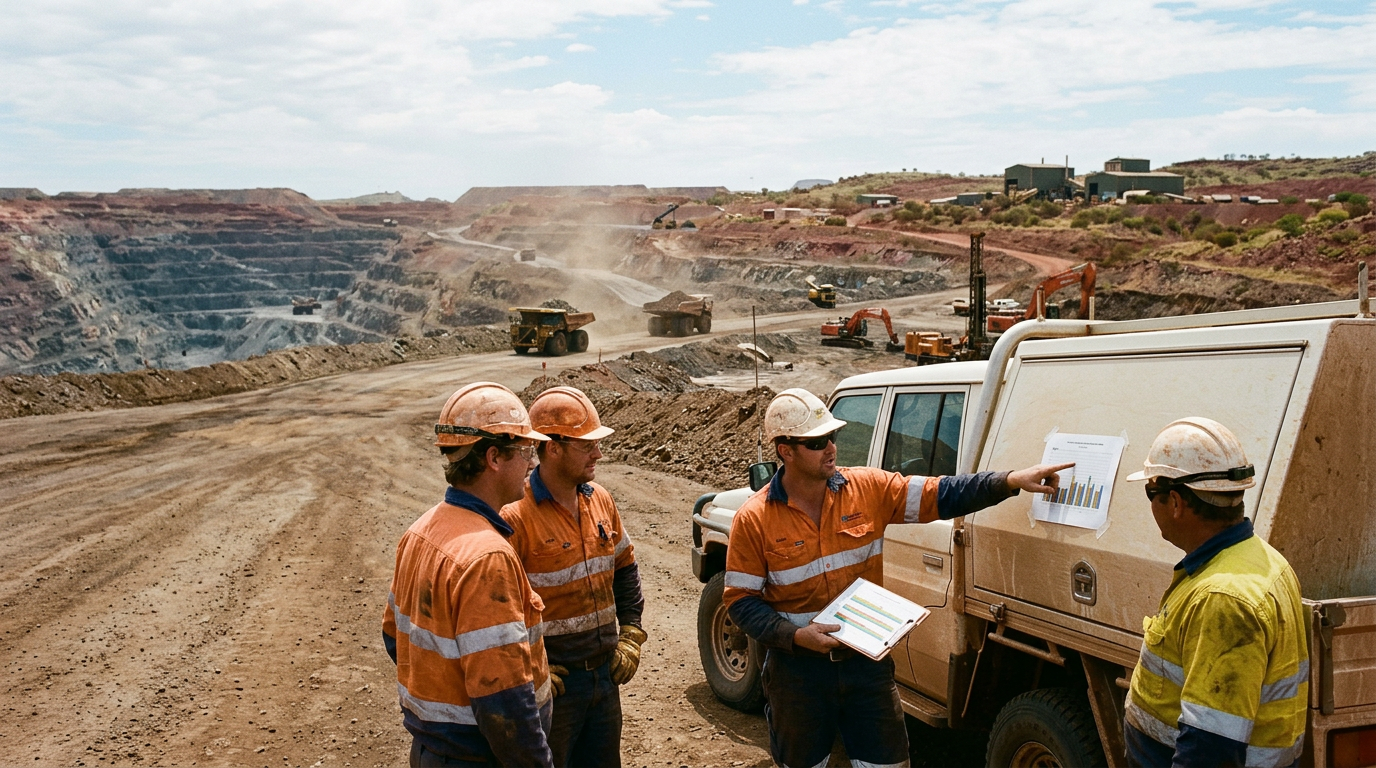
If you are looking to break into the Australian mining industry, one of the first terms you will encounter is the "swing." In FIFO (Fly-In Fly-Out) parlance, a swing refers to the block of consecutive days you spend working on-site, followed by your block of scheduled time off back home, known as R&R (Rest and Recreation). Because mine sites operate 24 hours a day, 365 days a year, workforces must be constantly rotated. This creates a unique working rhythm that is vastly different from the standard Monday-to-Friday suburban grind.
Demystifying the Swing: Understanding Australian FIFO Rosters
If you are looking to break into the Australian mining industry, one of the first terms you will encounter is the "swing." In FIFO (Fly-In Fly-Out) parlance, a swing refers to the block of consecutive days you spend working on-site, followed by your block of scheduled time off back home, known as R&R (Rest and Recreation). Because mine sites operate 24 hours a day, 365 days a year, workforces must be constantly rotated. This creates a unique working rhythm that is vastly different from the standard Monday-to-Friday suburban grind.
Your roster is the single most influential factor governing your life as a resource sector worker. It dictates not only how much money lands in your bank account every fortnight, but also when you see your family, how you manage your physical health, and how quickly you might experience burnout. Rosters are expressed as ratios of days on to days off, such as 2:1 (two weeks on, one week off) or 8:6 (eight days on, six days off).
While entry-level job seekers often focus purely on the hourly rate or the annual salary, experienced mine workers know that the roster structure itself is often the make-or-break element of a mining career. A highly paid role on a grueling swing can quickly lose its appeal if you find yourself too exhausted to enjoy your time off. Understanding how these schedules operate is critical to finding a role that matches both your financial goals and your lifestyle requirements.
The High-Yield Grind: 2:1 and 3:1 Rosters
The 2:1 roster (typically 14 days on, 7 days off) and the more demanding 3:1 roster (21 days on, 7 days off) are often referred to as the traditional "production" or "construction" swings. These schedules are the workhorses of the sector, particularly on remote major projects in Western Australia's Pilbara region or northern Queensland. On these rosters, you will typically work 12-hour shifts every single day of your swing, racking up massive amounts of overtime.
From a financial perspective, these rosters are where the big money is made. Because you are working more hours over the course of the year, your cumulative earnings are significantly higher than those on shorter swings. Contractors and construction companies frequently utilize 2:1 or 3:1 configurations because they need to fast-track project delivery. For an entry-level worker looking to pay off a mortgage quickly, buy a house, or build a solid financial nest egg, enduring a year or two of these longer swings is a common and highly effective strategy.
However, these financial rewards come with a substantial personal cost. Working 14 to 21 consecutive 12-hour days—often transitioning halfway through from day shift to night shift—takes a heavy toll on the body and mind. By the time you reach day 10 or 11, fatigue sets in, making safety vigilance even more critical. Furthermore, a 3:1 roster means you are away from home for 75 percent of the year, which can place immense strain on relationships and make maintaining social connections outside of the mine site incredibly difficult.
The Lifestyle Kings: 8:6 and Even-Time Swings
In response to growing awareness of mental health and worker retention issues, the Australian mining industry has seen a massive shift toward "lifestyle" rosters. The most popular of these is the 8:6 roster (eight days on, six days off), closely followed by "even-time" rosters like 7:7 (seven days on, seven days off) or 2:2 (two weeks on, two weeks off). These schedules are predominantly offered by major Tier 1 owner-operators, such as BHP, Rio Tinto, and Fortescue, for permanent, operational mining roles.
The primary appeal of the 8:6 or 7:7 swing is the balance it offers. With a six- or seven-day R&R block, workers have genuine time to decompress, spend quality time with partners and children, undertake hobbies, and travel without feeling like they are constantly packing a bag to return to site. The shorter duration of the work block also means that physical and mental fatigue does not accumulate to the dangerous levels often seen at the end of a two-week stretch.
The trade-off for this improved work-life balance is a lower annual take-home pay compared to longer rosters. Because you are working fewer hours over the year, your annual salary will be naturally lower for the same hourly rate. However, for career miners with families, the slight reduction in income is a price well worth paying to be home for half the weekends of the year. Many operators use these desirable rosters as a primary recruiting tool to lure experienced operators away from higher-paying contractor roles.
The Hidden Trap: Travel Time and R&R Erosion
One of the most common traps for new FIFO workers is failing to account for travel time when evaluating a roster. On paper, an 8:6 roster looks like you get nearly half the year off. However, the reality of how you travel to and from the mine site can drastically shrink your actual R&R. It is vital to understand whether you are flying on "company time" or "your own time."
If you are flying on your own time, your travel day is carved directly out of your R&R. For example, on an 8:6 roster, if you finish your last night shift on Wednesday morning, fly out Wednesday afternoon, and arrive home Wednesday night, your Wednesday is largely spent sleeping and traveling. If you then have to fly back to site the following Wednesday morning, your six days off have effectively shrunk to four and a half days of actual quality time at home. This is often referred to by miners as losing their "golden days" to airport terminals and regional flights.
When reviewing job offers, always ask how transit is handled. Some progressive companies offer "clean" rosters where travel occurs during your shift block (e.g., you fly in on day one and work a half-shift, or travel entirely on the company's rostered hours). Others require you to be on-site ready to work at 6:00 AM on day one, meaning you must fly in the afternoon or evening before, adding an unpaid night on-site to your swing.
Calculating the Real Numbers: Flat Rates vs. Hourly Overtime
To accurately compare FIFO job offers, you must look beyond the headline annual salary figure and dissect how that salary is calculated relative to your roster. In the Australian mining sector, remuneration is typically structured as either a "flat-rate salary" or an "hourly rate with overtime." Understanding how your roster interacts with these payment structures is key to ensuring you are being paid fairly for every hour you work.
A flat-rate contract pays you a set annual fee regardless of how many hours you work on your swing. While this provides income security and predictable budgeting, it can sometimes work against you on longer or unpredictable rosters where delays, weather events, or operational demands force you to stay on-site longer than scheduled. Conversely, hourly-rate contracts pay you for every single hour your swipe-card registers on-site. On an hourly contract, working a 2:1 roster means your overtime rates (often double-time for hours worked beyond 38 per week or on weekends) scale up rapidly, leading to massive payslips.
When evaluating an offer, calculate your "effective hourly rate" by dividing the gross annual salary by the total number of hours you will actually work on-site over the year, including any unpaid transition days. You may find that a $150,000 flat-rate salary on a 2:1 roster actually equates to a lower hourly rate than a $120,000 salary on an 8:6 roster. Don't let large headline figures blind you to the actual value of your labor.
Making Your Choice: Aligning Your Roster to Your Life Stage
There is no single "best" FIFO roster; there is only the roster that is right for your current stage of life, financial health, and personal relationships. What works perfectly for a single 22-year-old trying to secure a deposit for their first home will look very different from what works for a 40-year-old with primary school-aged children and a mortgage that is already well under control.
If you are entering the industry as an entry-level worker, you may have to accept whatever roster is offered to get your foot in the door—which is often a harder 2:1 or even a 3:1 drilling or construction swing. This should be viewed as a rite of passage and a short-term sacrifice. Use this time to build your skills, gain your site competencies, prove your reliability, and rack up savings. Once you have twelve to eighteen months of solid site experience under your belt, your marketability increases exponentially, allowing you to target preferred lifestyle rosters.
Ultimately, longevity in the Australian mining industry requires honest self-reflection. Talk openly with your partner or family about the realities of the roster you are considering. Establish clear financial goals so you know exactly why you are taking on the demands of FIFO life, and regularly review whether your current swing is still serving your long-term personal and professional well-being.