Rigger / Dogger Progression
Lifting & Cranes Specialist
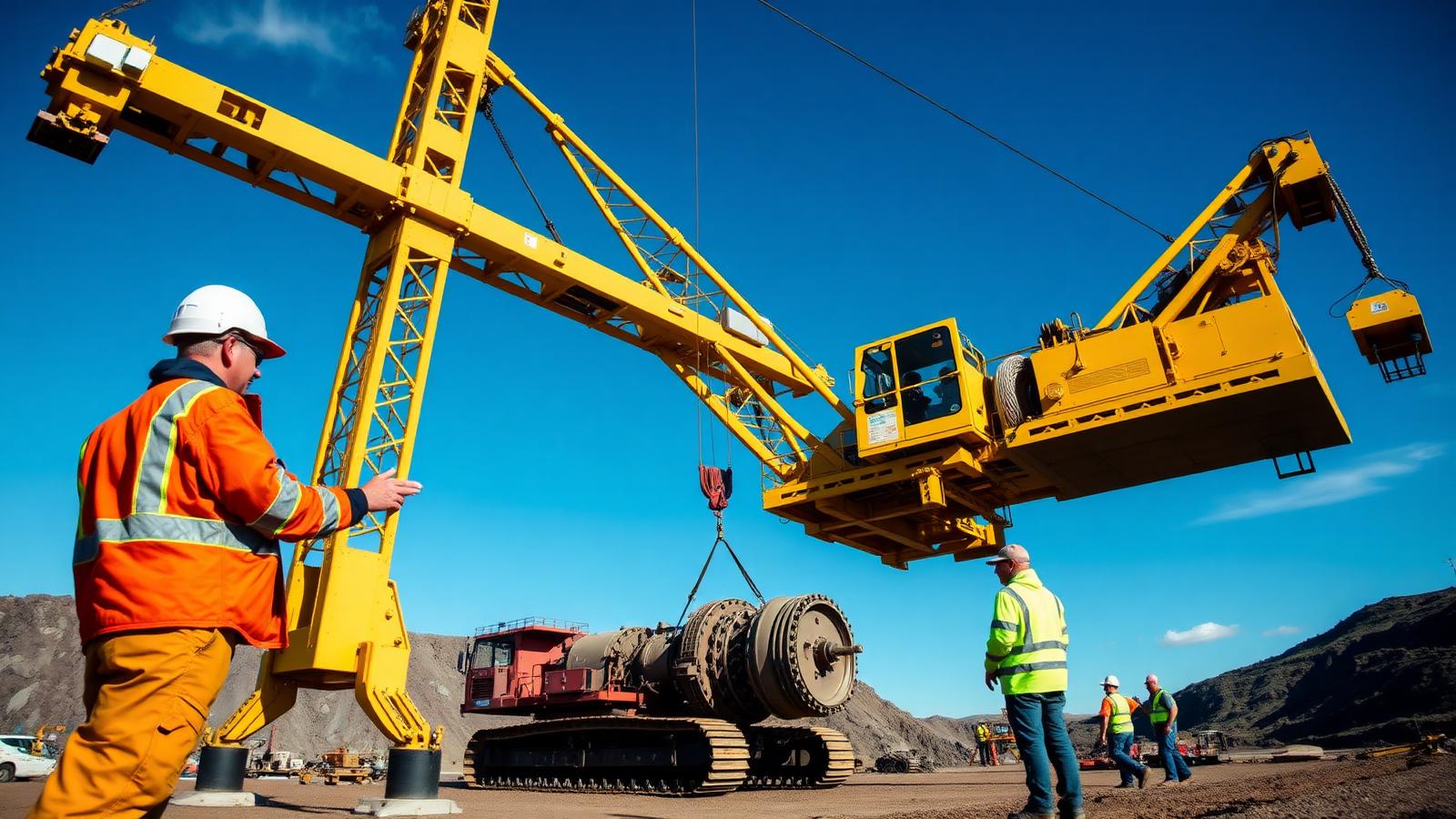
Overview
Rigging and dogging is one of the most consistently in-demand skill categories on Australian mine sites because almost every mechanical intervention — shutdown, plant relocation, structural change, breakdown recovery, new-build construction — depends on certified riggers and doggers to plan and execute lifts safely. The pathway is fully ticketed and progressive: candidates start with a Dogging ticket, move through Basic Rigging, Intermediate Rigging and eventually Advanced Rigging, with each step unlocking higher-complexity work and higher day rates. The trade is physical, technical, and unforgiving of errors, which is precisely why it pays well. The full progression takes three to five years of hands-on site work punctuated by short training courses.
Courses & offerings
The core progression is: Dogging (CPCCLDG3001, four to five days plus assessment, $1,200–$1,600) — teaches lift planning, load estimation, sling selection, and directing crane operators via hand signals or radio; Basic Rigging (CPCCLRG3001, five days, $1,400–$1,800) — covers structural steel erection, plant equipment lifting, and pre-cast concrete panel work; Intermediate Rigging (CPCCLRG3002, five days, $1,600–$2,000) — adds cranes as a component of the load, conveyors, and complex mechanical services; Advanced Rigging (CPCCLRG4001, five days, $1,800–$2,400) — unlocks multiple crane lifts, tilt-up panel erection, and rigging suspended from cranes. All four issue High Risk Work Licences through SafeWork Australia. Supporting tickets include Working at Heights, Confined Space, EWP over 11 metres and Basic Scaffolding.
Career outcomes & earnings
A dogger with recent site experience typically earns $110,000 to $150,000 on a residential or FIFO roster. Basic and Intermediate Riggers on shutdown day-rate work commonly earn $700 to $1,000 per twelve-hour shift, translating to $180,000 to $260,000 annualised for a full shutdown calendar. Advanced Riggers who plan and supervise complex lifts on structural steel, conveyor or crusher installation projects can exceed $300,000. The best-paid rigging work is on major shutdowns for BHP, Rio Tinto, FMG, Roy Hill, Newmont and Northern Star, or on new-build capital projects with civil contractors like Monadelphous, Civmec, UGL and Downer.
Insider tips
Complete the ticket progression in the sequence intended — assessors will fail you fast if you attempt Intermediate Rigging without real Basic Rigging hours logged on-site. Keep a physical logbook of every significant lift you plan or execute, signed by your supervisor. Get your Class C car licence and HR truck licence early in your rigging career — riggers who can also operate a service truck are dramatically more employable on remote shutdown rosters.