Tradesperson — Fitter / Boilermaker / Auto Electrician
Maintenance & Shutdown Track
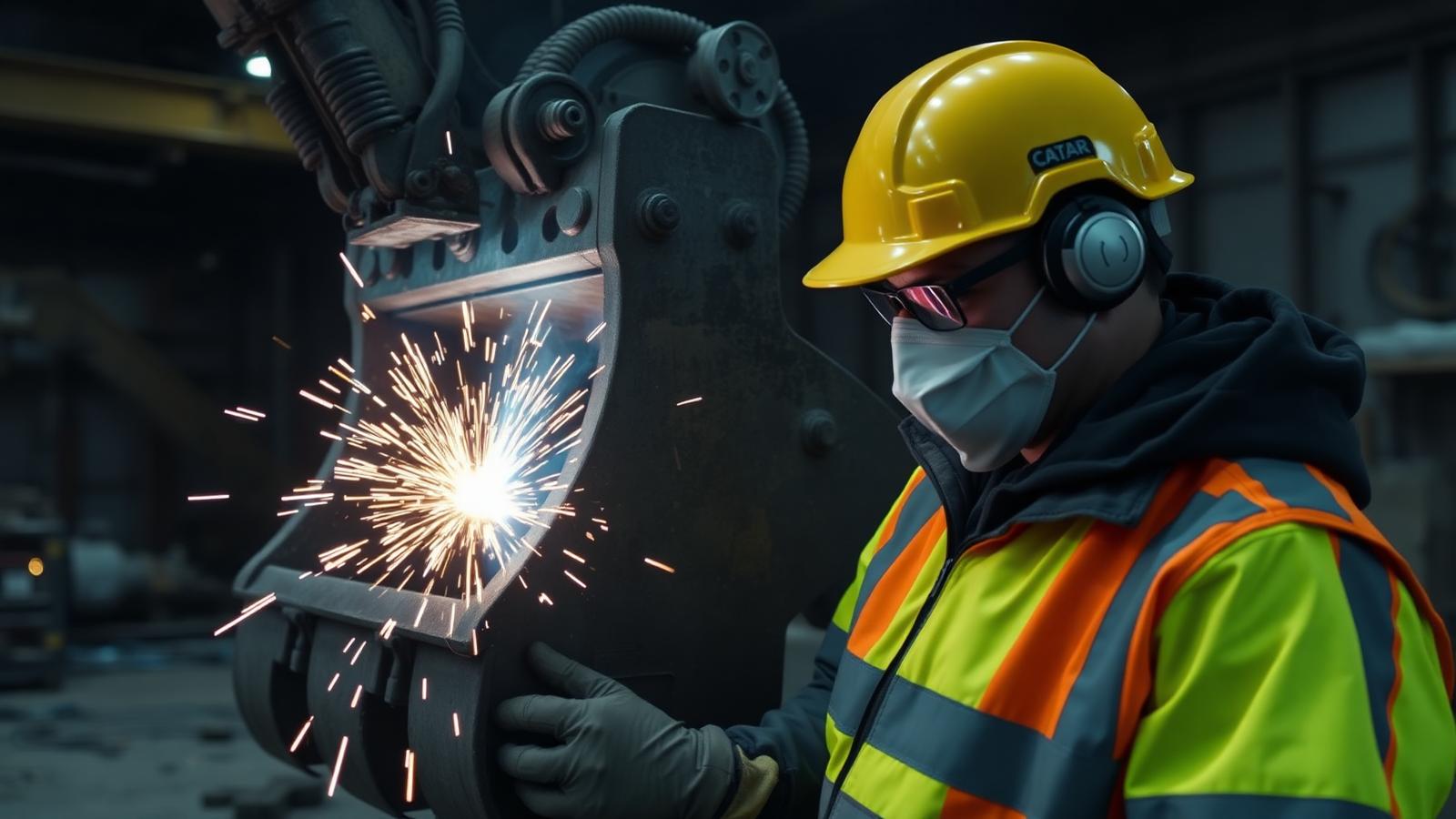
Overview
The trade pathway is the highest-earning long-term route into Australian mining that does not require a university degree. A completed Certificate III trade qualification is the single most durable credential in the industry — it is nationally portable, does not expire, and is in structural short supply across every commodity, every state and every roster type. Mining maintenance work is fundamentally different from mining operations: it pays more, is more resistant to commodity-price downturns, and offers substantially more control over roster and location once experienced. The pathway takes four years of apprenticeship followed by one to two post-trade years in a related workshop or construction environment before the transition to mining maintenance work.
Courses & offerings
The four trade qualifications most sought after in Australian mining are: Certificate III in Engineering — Mechanical Trade (MEM30219), producing heavy diesel fitters and mobile plant fitters; Certificate III in Engineering — Fabrication Trade (MEM31922), producing boilermakers and welders; Certificate III in Electrotechnology (UEE30820), producing industrial electricians who work under high-voltage switching regimes; and Certificate III in Automotive Electrical Technology (AUR30320), producing auto electricians who specialise in the diagnostics of Caterpillar, Komatsu and Liebherr mobile plant. Certificate III in Instrumentation and Control (UEE31220) is a smaller but growing category tied to processing plant maintenance. All are four-year apprenticeships combining on-the-job hours with block-release TAFE study.
Career outcomes & earnings
A qualified mining trade role sits at the top of the blue-collar earning ladder in Australia. A first-year post-trade heavy diesel fitter or boilermaker in the Pilbara or Bowen Basin typically earns $130,000 to $170,000 on a residential or FIFO roster. Experienced tradespeople moving into shutdown day-rate work commonly clear $180,000 to $250,000+, and the highest-paid categories — high-voltage electricians, dragline fitters, HVAC specialists — occasionally exceed $300,000. Trade qualifications also unlock progression into leading hand, supervisor, superintendent and reliability-engineering roles, all of which sit inside the $180,000–$320,000 salary band.
Insider tips
Do not delay the transition from your apprentice employer to mining maintenance work — the earnings jump typically doubles your take-home inside twelve months. Add Confined Space, Working at Heights and HR truck licence tickets during your final apprenticeship year, before your first mining application. If your trade is boilermaking or welding, complete formal weld qualification testing (MMA/GTAW to AS/NZS 1554) before applying — this ticket set alone can add $40,000+ to your first-year mining salary.