Karratha
Pilbara Coastal Hub — Iron Ore & LNG
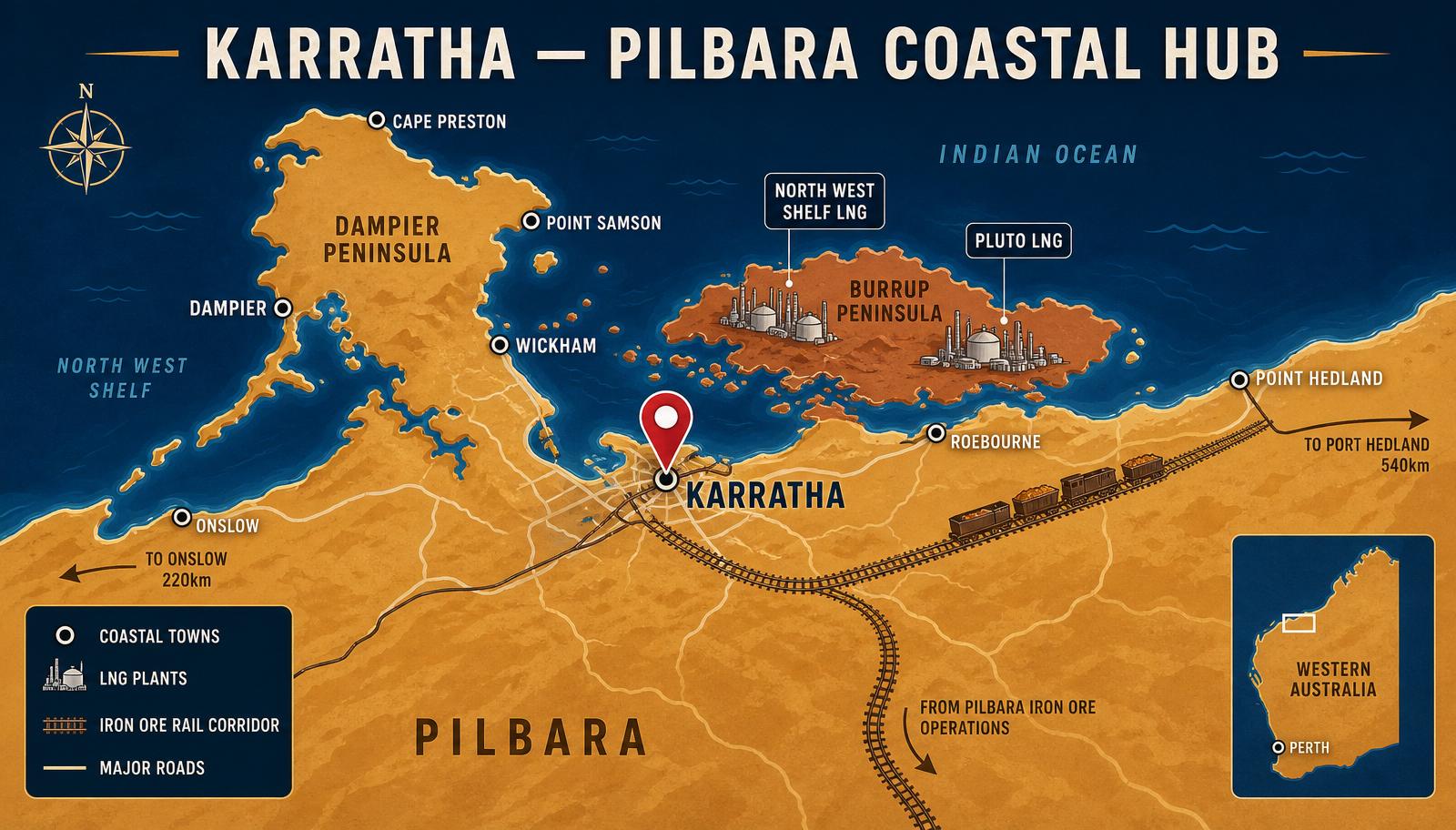
Overview
Karratha is the largest Residential Town in the Pilbara and the region's Commercial, Family and Retail Hub. Sitting on the Coast about 1,600km north of Perth, it grew out of the Iron Ore and LNG booms of the 1960s and 70s to become a modern city of around 25,000 people with a full commercial CBD, a leisure centre, a private and public hospital, quality schools and dozens of parks. Employment in Karratha is unusual because it draws from two entirely different resource sectors at once. On the Iron Ore side, Rio Tinto operates its Dampier and Cape Lambert Port Facilities and moves ore in from inland Pilbara Pits at Marandoo, Brockman, West Angelas and Paraburdoo. On the Energy side, the Burrup Peninsula just north of town hosts Woodside's North West Shelf LNG Plant and Pluto LNG Facility — two of the largest Liquefied Natural Gas Processing Complexes on Earth — plus Yara Pilbara's Ammonia and Nitrates Plants and Chevron's Wheatstone Facility further west near Onslow. Karratha also supports Rio Tinto's Dampier Salt Operation, one of the largest solar salt fields in the world. The result is a Residential Workforce that includes Iron Ore Operators, LNG Process Technicians, HV Electricians, Instrument and Control Techs, Marine Crews, Mechanical Trades and Construction Workers — often earning $180,000 to $280,000 residentially with Housing Subsidy, District Allowance and Free Flights back to Perth for annual leave. Karratha is where families choose to live in the Pilbara.
- • Karratha
- • Dampier
- • Wickham
- • Point Samson
- • Roebourne
- • Rio Tinto Iron Ore
- • Woodside Energy
- • Chevron Australia
- • Rio Tinto Dampier Salt
- • Yara Pilbara
- • Iron Ore
- • LNG
- • Ammonia
- • Salt
- • Nitrates
Geology & Resources
The Karratha region is one of the most geologically rich Postcodes on Earth. Onshore Iron Ore comes from the Hamersley Basin to the south. Just offshore, the Carnarvon Basin holds the enormous Natural Gas fields that feed the North West Shelf and Pluto LNG trains. The Burrup Peninsula itself is 3.5-billion-year-old volcanic rock and is also the site of one of the largest known collections of Aboriginal petroglyphs anywhere in the world — a fact that shapes environmental approvals for every new industrial project.
Who's Hiring — Major Employers
Rio Tinto is the biggest single employer through its Ports, Rail and Salt Operations. Woodside operates the North West Shelf Venture and Pluto LNG, both of which run large permanent workforces of Process Technicians, HV Electricians, Instrument Techs, Mechanical Fitters, Turnaround Engineers and Marine Loading Crews. Chevron's Wheatstone Facility west of town, Yara Pilbara's Ammonia and Nitrates Plants, and Perdaman's under-construction Ceres Urea Project all add to the industrial workforce. Contractors — Monadelphous, Clough, UGL, Kentz-SNC Lavalin, Worley, DecMil, Downer — rotate hundreds of Construction and Shutdown Workers through Karratha at peak times.
Lifestyle, Rosters & Living
Karratha is the most livable town in the Pilbara. It has a proper CBD, three large shopping centres, cafes, breweries, a cinema, a $60M leisureplex with an Olympic Pool, and some of the best boat-ramp fishing on the WA Coast — Spanish Mackerel, Coral Trout, Emperor and Barramundi are all catchable from a runabout. Homes are Company-Subsidised for most Residential Workers, which offsets what would otherwise be extreme rents. The airport runs 20+ flights a day to Perth. Weather mirrors the rest of the Pilbara — brutal wet-season summers, spectacular dry-season winters.
How to Get Hired Here
The two easiest pathways in are through Rio Tinto's structured Trainee Programs (Rail, Ports, Salt, Process) and through Woodside's Process Technician and Trades Traineeships. Both take genuine entry-level candidates each year and put them through paid 12-to-24-month qualifications. Trades — Diesel Fitters, HV Electricians, Instrument Techs, Riggers, Boilermakers — are recruited year-round both permanently and through Labour Hire. Standard 11 (or WA Site Induction), Manual Licence and a Full Medical are the baseline. LNG-side roles also require Gas Test Atmospheres and Confined Space Certification.
Long-Term Outlook
Long-term outlook is very strong. Woodside's Scarborough–Pluto Train 2 project extends LNG Production out to at least 2055. Rio Tinto's Port Expansion at Cape Lambert continues, Perdaman's $6B Urea Project is under construction, and multiple Green-Hydrogen and Green-Ammonia proposals for the Burrup would add thousands of additional Construction and Operations Jobs from 2027 onward.