Confined Space Entry
1 day · $220–$350 · Required for: Tank/vessel workers, boilermakers, cleaners on shutdowns
Overview
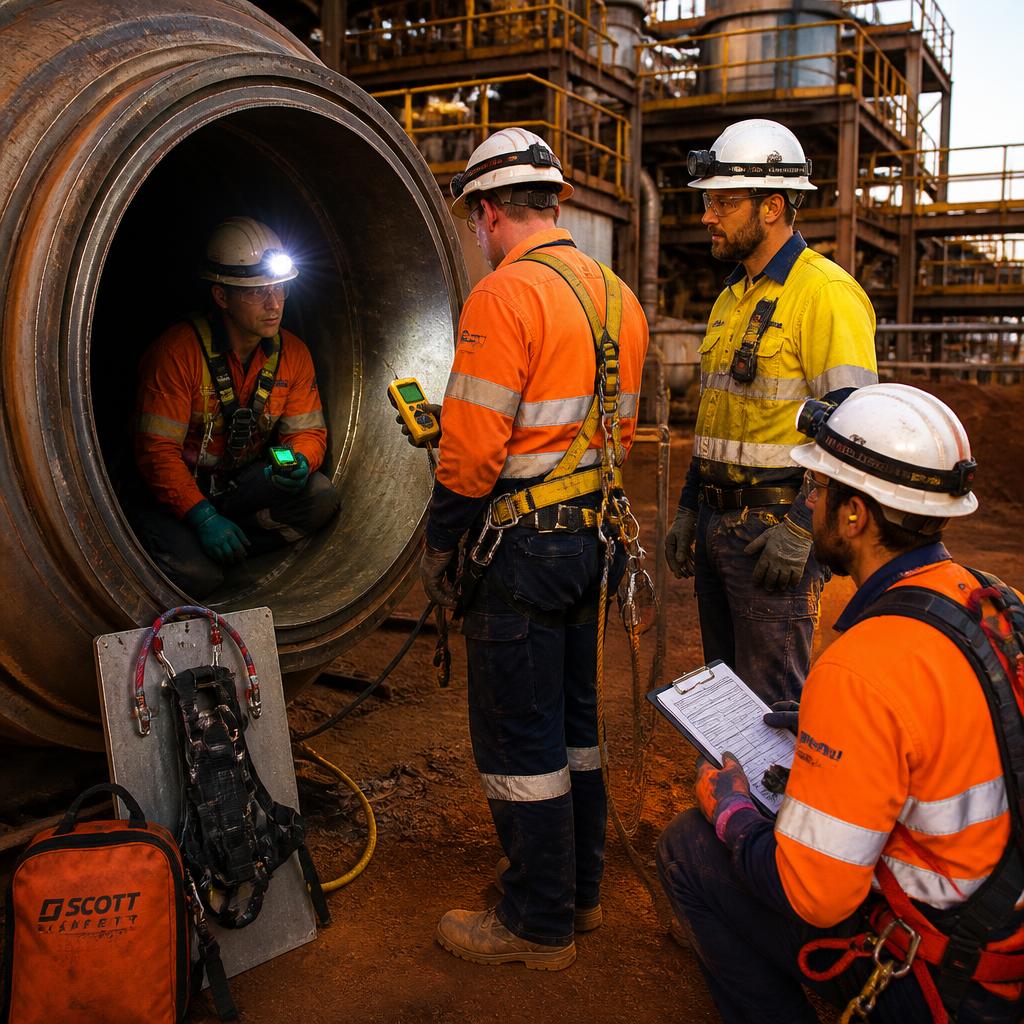
Confined Space Entry training (RIIWHS202E and RIIWHS210E) teaches how to Safely Work inside Tanks, Vessels, Silos, Ducts, Pipelines, and any Enclosed area with Restricted access and potential Atmospheric Hazards. A single-day course at an RTO costs $220 to $350 and covers Permit-to-work Systems, Atmospheric Testing with Gas Detectors, Ventilation and Purging, Safe entry procedures, Communication protocols, Standby Personnel duties, and Emergency Rescue plans. You'll practise using a Four-Gas Monitor and wear breathing apparatus if the site requires it. Likely to also run a Practice Rescue. Confined Space is one of the Highest-Fatality Categories in Australian mining and processing. Most Incidents involve Oxygen Deficiency, Hydrogen Sulphide, or entrapment, so sites are Strict about Permits, Tag Boards, and Rescue Readiness. The real earning power comes during shutdowns: Boilermakers, Welders, Cleaners, and Inspection Crews with a current confined space ticket routinely command Premium Rates because the work is Uncomfortable, Permit-heavy, and Skill-limited. Refresh every two years and always keep your Gas Monitor Calibration record with you. If you're a Tradesperson Chasing Shutdown dollars, this ticket pays for itself on day one.
How to get your Confined Space Entry
Confined Space training is delivered under two stacking unit codes — RIIWHS202E (Enter and Work in Confined Spaces) and RIIWHS210E (Gas Test Atmospheres). The full-day course covers the legal definition of a confined space under AS 2865, permit-to-work systems, atmospheric hazards (oxygen deficiency, oxygen enrichment, flammable gases, toxic gases, hydrogen sulphide, carbon monoxide), pre-entry testing sequences, continuous atmospheric monitoring, mechanical ventilation, isolation and lockout/tagout, communication systems, standby personnel duties, and emergency rescue planning. Practical assessment requires you to use a four-gas monitor (typically an MSA Altair 4XR or Drager X-am 2500), perform a pre-entry gas test, don supplied-air breathing apparatus (SABA) or a self-contained self-rescuer (SCSR), complete a permit-to-work checklist, and physically enter a mock confined space (usually a purpose-built training tank) while a partner performs standby duties. Rescue simulation is often the highest-fail component: you must demonstrate a non-entry rescue using a tripod, winch, and full-body harness, and articulate when entry rescue becomes justified. Cost is $220–$350 and the Statement of Attainment issues same-day. There are no formal prerequisites, but bring your White Card and Working at Heights ticket because most sites stack the three together. Refresh is every two years; some sites (particularly LNG plants and hydrogen sulphide-rich gold ore processing) require annual refresh regardless.
Who to enquire with — training providers & employers
Leading confined space RTOs include Site Skills Training (Mackay, Perth, Newcastle), Access Training Centre (Perth, Karratha), TEC-NQ (Townsville), Skilltech Consulting Services (Sydney, Brisbane), and Trainwest (Perth). Emergency services training providers — CFA Public Safety Business Agency, MFB Training, and Australian Emergency Management Institute — also deliver confined space rescue programs to a higher operational standard for shutdown emergency response teams. Major shutdown contractors Monadelphous, UGL, Civmec, Broadspectrum, and CIMIC routinely fund confined space refreshers for tradespeople they've committed to shutdown rosters at BHP Nickel West, Rio Tinto Iron Ore, Fortescue, and Woodside/Chevron LNG facilities. Add the ticket to your resume before the September–November and February–May shutdown windows and expect immediate call-backs from labour hire agencies WorkPac, Programmed, and One Key Resources.
Insider tips
Never accept a permit that has crossed-out gas readings or missing signatures — walk away and escalate. Always confirm gas monitor bump-test date and calibration cert before entry. And practise donning a SABA blind — sites randomly time this during drills.