First Aid + CPR (HLTAID011)
1 day · $130–$180 · Required for: Almost every role — often required to be current
Overview
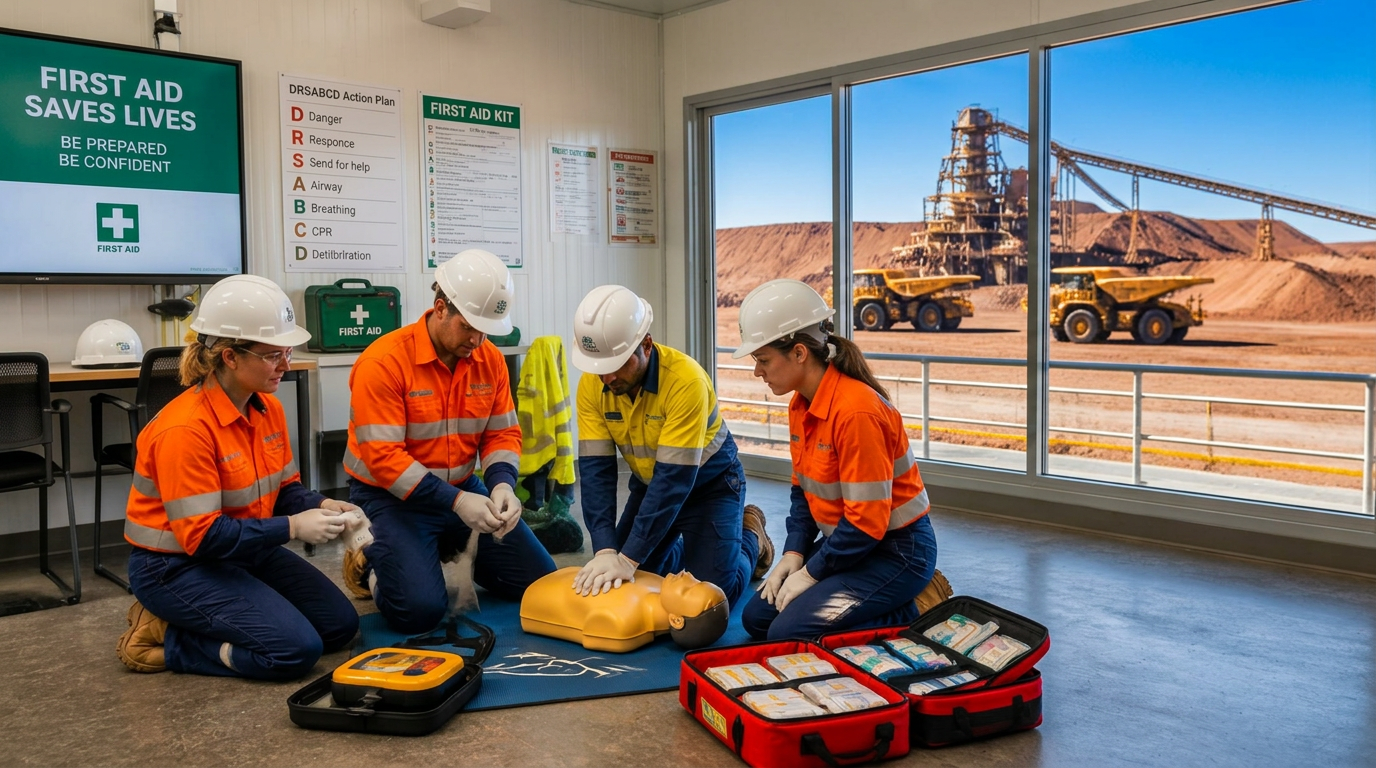
The Certificate HLTAID011 Provide First Aid and HLTAID009 Qualifications to Provide CPR are the Standard Workplace First Aid Trainings and are considered Mandatory on Australian Mine Sites. In fact Many Labour Hire Agencies insist on Applicants having this Certificate as Minimum to Enter Minesite. The Single-day combined Course Costs $130 to $180 and covers Primary and Secondary Surveys, CPR on Adults, Infants, and Children. Also Trains for use of an Automated External Defibrillator (AED) Burns, Fractures, Shock, Management of Bleeding, Snake Bite, Anaphylaxis with an EpiPen, Heat and Cold Injuries, and Psychological First Aid. Assessment is a mix of Written Questions and a Practical CPR Demonstration on a Mannequin. CPR must be Refreshed Every 12 months and the Full First Aid Ticket every Three years. Most Workers just book the combined refresh annually to stay simple. On remote Mine sites, Medical Response times can be long and Emergency Service Helicopters may take hours to arrive so your First Aid Skills Genuinely matter. Many teams also nominate Designated First Aiders who receive a Small Allowance on top of base pay. It's the Cheapest, Fastest Ticket that Quietly Influences almost every Recruitment Decision.
How to get your First Aid + CPR (HLTAID011)
The standard workplace first aid qualification in Australia is HLTAID011 Provide First Aid, which incorporates HLTAID009 Provide Cardiopulmonary Resuscitation and HLTAID010 Provide Basic Emergency Life Support. A single training day (six to eight hours) covers the DRSABCD action plan, primary and secondary surveys, adult and paediatric CPR at the ARC Guidelines-compliant 30:2 ratio, correct use of an Automated External Defibrillator, management of external and internal bleeding, burns (thermal, chemical, electrical), fractures and immobilisation, spinal precautions, anaphylaxis with EpiPen administration, asthma with reliever puffer, seizures, shock, diabetic emergencies, snake and spider bites (Australian-specific — pressure immobilisation bandaging is life-saving), heat stroke and hypothermia, drowning, and psychological first aid. Some RTOs offer a blended-delivery option where you complete the theory online in advance and only need a three to four hour face-to-face session for the practical assessment — this suits shift workers well. Assessment is a written knowledge test (typically 25 multiple-choice plus short-answer questions) and a supervised practical where you perform two minutes of quality CPR on a mannequin, use an AED, and manage two casualty scenarios (typically a choking adult, an anaphylaxis victim, or a bleeding wound). Cost sits between $130 and $180 and the Statement of Attainment is issued same-day. CPR must be refreshed every 12 months; the full first aid ticket every three years. Most mining employers require both to be current at the time of induction.
Who to enquire with — training providers & employers
The largest national first aid RTOs are St John Ambulance (offices in every state capital and most regional centres), Australian Red Cross First Aid, Australia Wide First Aid (online-blended), Allens Training, First Aid Pro, and CBD College. In the Pilbara and Bowen Basin, regional providers including Pilbara First Aid Training (Karratha), Central Queensland First Aid Training (Mackay), and Kalgoorlie-based Goldfields Training Services deliver same-day certificates aligned to mine site inductions. Many mining labour hire agencies (WorkPac, Programmed, One Key, Chandler Macleod, HAYS Mining) will book and pay for your first aid refresh if you're actively rostered. Tier 1 miners including BHP, Rio Tinto, and Fortescue occasionally run funded refreshers as part of their pre-employment or wellness programs.
Insider tips
Book your annual CPR refresh in the same week each year — set a phone reminder because expired CPR is the number-one 'silent' reason recruiters skip a candidate. Save the PDF certificate to cloud storage and email a scan to yourself. Nominate for the site first aider allowance during induction — free money that recognises the training.